
Dark spots, post-inflammatory marks, and uneven skin tone are concerns that affect a significant proportion of people with melanin-rich skin. They are also concerns that single-ingredient treatments frequently fail to resolve fully, not because those ingredients do not work, but because hyperpigmentation is a multi-step biological process that a single mechanism of action cannot adequately address on its own.
Alpha arbutin and propolis for hyperpigmentation has emerged as one of the more complete topical approaches available, combining direct melanin inhibition with the anti-inflammatory barrier support that prevents new pigmentation from forming. This guide explains the science, the logic, and the five products that make this combination work in practice.
The Biology of Hyperpigmentation: Why One Ingredient Is Rarely Enough
When skin experiences any form of stress, whether UV radiation, a breakout, friction, or an inflammatory skin response, melanocytes respond by producing more melanin. Melanin is not inherently problematic. It is the skin’s protective response. The problem arises when this response is excessive or prolonged, producing more pigment than the skin needs and depositing it unevenly across the surface.
Effective treatment of hyperpigmentation requires addressing this process at multiple points. You need something that inhibits the enzyme driving melanin production. You need something that reduces the inflammatory signalling that triggers the overproduction response. And you need daily UV protection to prevent the process from being continuously restarted by the single largest external trigger.
Alpha arbutin and propolis for hyperpigmentation addresses the first two requirements: arbutin handles the enzyme, propolis handles the inflammation. SPF handles the third, and its inclusion in any treatment routine is mandatory rather than optional.
What Alpha Arbutin Does and Why It Works
Alpha arbutin is a stabilised, glycosylated derivative of hydroquinone produced naturally from bearberry plants. It works specifically by binding to tyrosinase, the enzyme responsible for converting tyrosine into melanin inside the melanocyte, and inhibiting its activity. Less functional tyrosinase means less melanin produced, which means lighter, more evenly pigmented skin with consistent treatment.
The advantage of alpha arbutin over hydroquinone, which works through the same mechanism more aggressively, is tolerability. Hydroquinone’s potency comes with risks including ochronosis, a paradoxical permanent darkening of the skin with prolonged use, and a higher irritation profile that makes sustained daily use problematic for many skin types. Alpha arbutin achieves comparable brightening more gradually and far more safely, which matters for something that needs to be applied daily over weeks and months to produce lasting results.
What Propolis Does and Why It Belongs in This Routine
Propolis enters the alpha arbutin and propolis for hyperpigmentation combination from a different angle. It does not inhibit tyrosinase. What it does is reduce the inflammatory environment that activates tyrosinase in the first place.
Rich in flavonoids, phenolic acids, and natural antioxidants, propolis is one of the most potent anti-inflammatory ingredients available in skincare. When applied consistently, it reduces the baseline inflammation in the skin that causes melanocytes to remain in a heightened state of activity. A calmer, less inflamed skin produces less reactive pigmentation. Propolis also strengthens the moisture barrier, which makes the skin more resilient to the environmental triggers that would otherwise cause fresh inflammation and fresh dark marks.
This is why the combination of alpha arbutin and propolis for hyperpigmentation outperforms either ingredient alone. Arbutin treats the pigmentation that already exists. Propolis reduces the conditions that would cause more to form.
Alpha Arbutin and Propolis for Hyperpigmentation: The Products
Propolis Product
COSRX Full Fit Propolis Synergy Toner
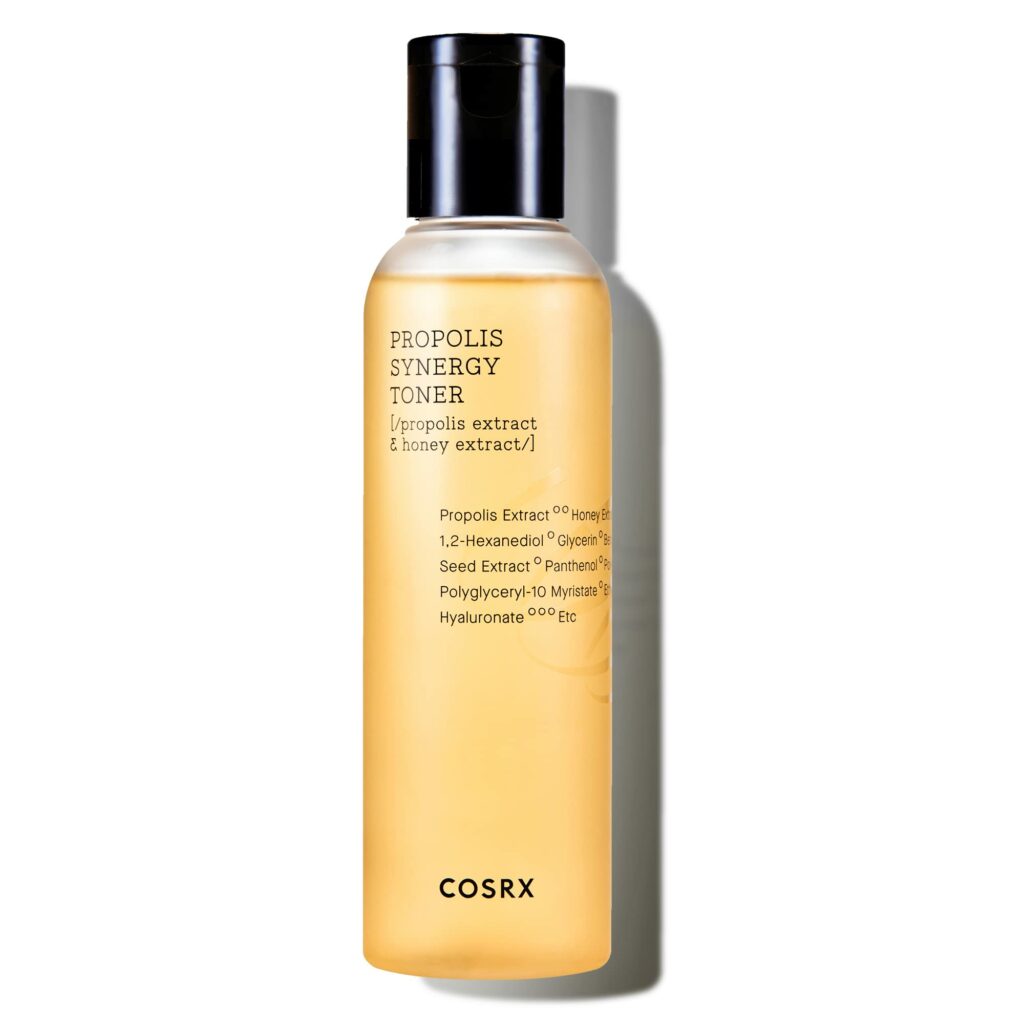
The COSRX Full Fit Propolis Synergy Toner is the most propolis-rich consumer skincare product available for the kind of daily toning step that an alpha arbutin and propolis for hyperpigmentation routine requires. At 72.6% Black Bee Propolis Extract and 10% Honey Extract, the formula is not a product that happens to include propolis. It is a product built almost entirely around it.
Applied after cleansing as the first step of the active routine, it does something that no alpha arbutin serum can do alone: it addresses why dark marks keep forming rather than only working on the ones already present. The anti-inflammatory activity of the propolis reduces melanocyte activation at the trigger point, while the barrier strengthening improves the skin’s overall resilience against further inflammatory events.
The hydration benefit is an important secondary function. Dehydrated skin is more reactive skin, and more reactive skin produces more post-inflammatory pigmentation. The honey extract and the propolis together ensure that the skin is well-hydrated throughout the treatment process, reducing reactivity and improving the conditions under which the alpha arbutin serums that follow can work.
Pros:
- 72.6% propolis concentration delivers genuine anti-inflammatory and barrier-building benefits
- Addresses melanocyte activation at the inflammation stage before new pigmentation forms
- Deeply hydrating formula reduces skin reactivity that worsens hyperpigmentation
- Prepares skin for improved absorption of the alpha arbutin serums applied after
Cons:
- Slightly viscous texture feels different from standard liquid toners for first-time users
- Works best as part of a combined routine rather than a standalone hyperpigmentation treatment
Alpha Arbutin Products
1. Skin By Zaron 2% Alpha-Arbutin Serum
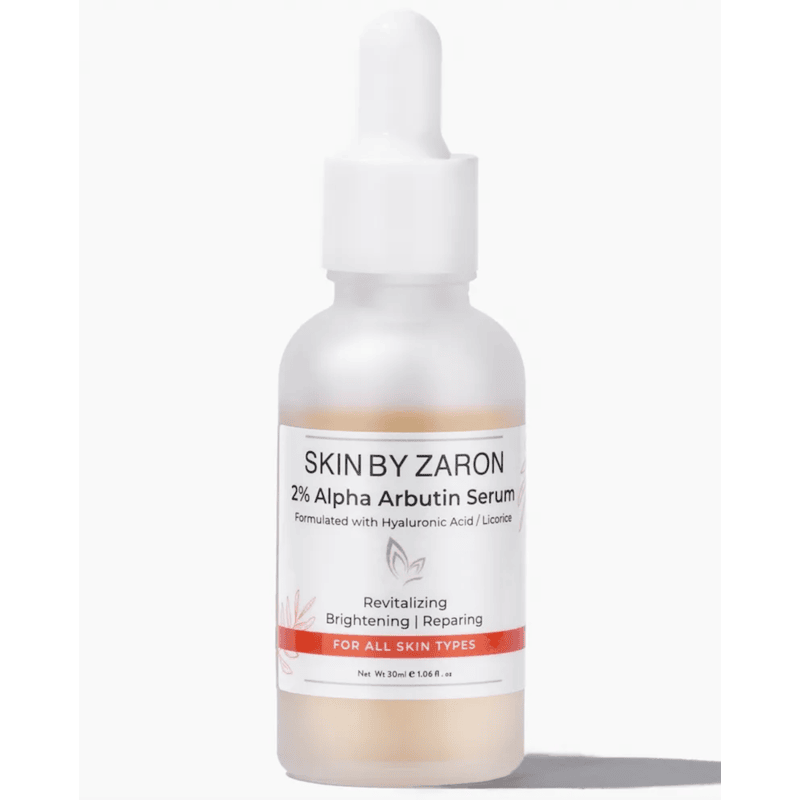
The Skin By Zaron 2% Alpha-Arbutin Serum makes a straightforward case for itself within this routine: it is a locally produced, reliably available, effective alpha arbutin serum at the clinically meaningful 2% concentration. For the alpha arbutin and propolis for hyperpigmentation approach to work, the alpha arbutin serum needs to be applied consistently every day over several weeks. A locally produced product you can access immediately when you run out supports that consistency in a way that imported alternatives with unpredictable availability do not.
The formula is gentle and suitable for sensitive skin, making it a practical starting point for anyone new to alpha arbutin who wants to introduce the ingredient alongside the propolis toner without overwhelming the skin.
Pros:
- 2% Alpha Arbutin at the effective concentration for progressive hyperpigmentation treatment
- Local production ensures consistent availability for the sustained daily use results require
- Gentle formulation suitable for sensitive skin beginning an active brightening routine
- Targets dark spots, discolouration, and post-inflammatory marks with daily use
Cons:
- Single-active formula without additional brightening ingredients for multi-pathway treatment
- Better suited to mild to moderate pigmentation than advanced or long-standing dark spots
2. Cosmo 2% Alpha Arbutin and Hyaluronic Acid Face Serum
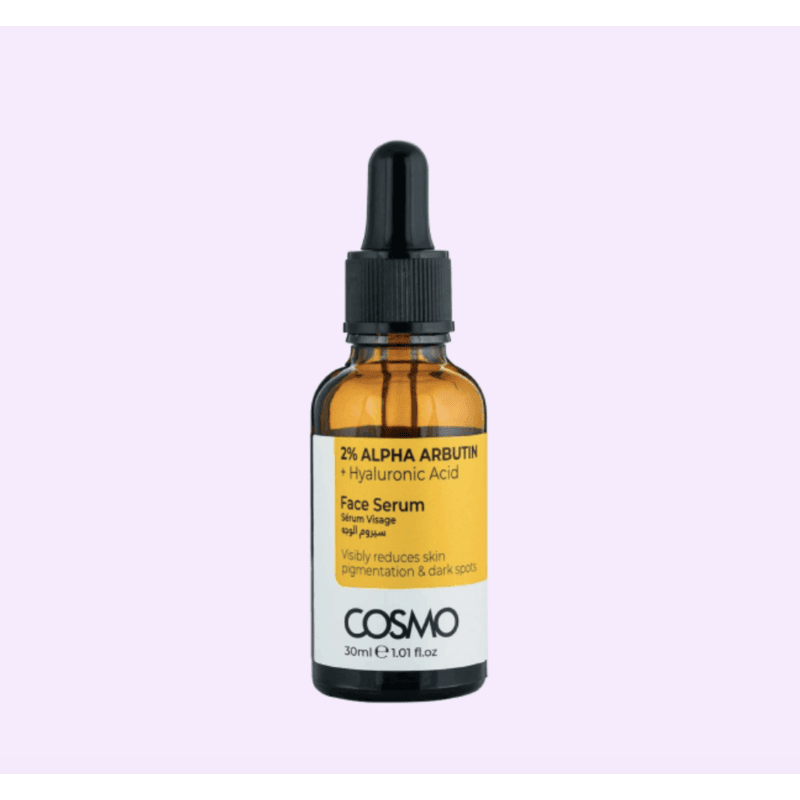
The Cosmo serum differentiates itself from basic alpha arbutin formulas through two meaningful additions: hyaluronic acid for simultaneous hydration and an AHA component for accelerated surface renewal. Hyaluronic acid addresses the dehydration that many people dealing with hyperpigmentation also experience, particularly when other actives are in use. The AHA gently exfoliates the surface to shed pigmented cells faster, which means the alpha arbutin working underneath has less surface buildup obscuring its results.
This makes the Cosmo serum one of the more efficient products in the alpha arbutin and propolis for hyperpigmentation category, addressing melanin inhibition, texture, and hydration within a single serum step. The AHA content makes evening use preferable and morning SPF non-negotiable.
Pros:
- Alpha arbutin inhibits melanin while AHA accelerates shedding of existing pigmented cells
- Hyaluronic acid maintains hydration throughout active brightening treatment
- Multi-functional formula addresses pigmentation and texture in a single product
- Suitable for all skin types with non-abrasive exfoliation appropriate for sensitive skin
Cons:
- AHA content requires evening use and makes morning SPF absolutely essential
- Multi-active formula warrants gradual introduction for those new to combined actives
3. Garden of Wisdom Alpha Arbutin 2% and Kojic Acid 1% Serum
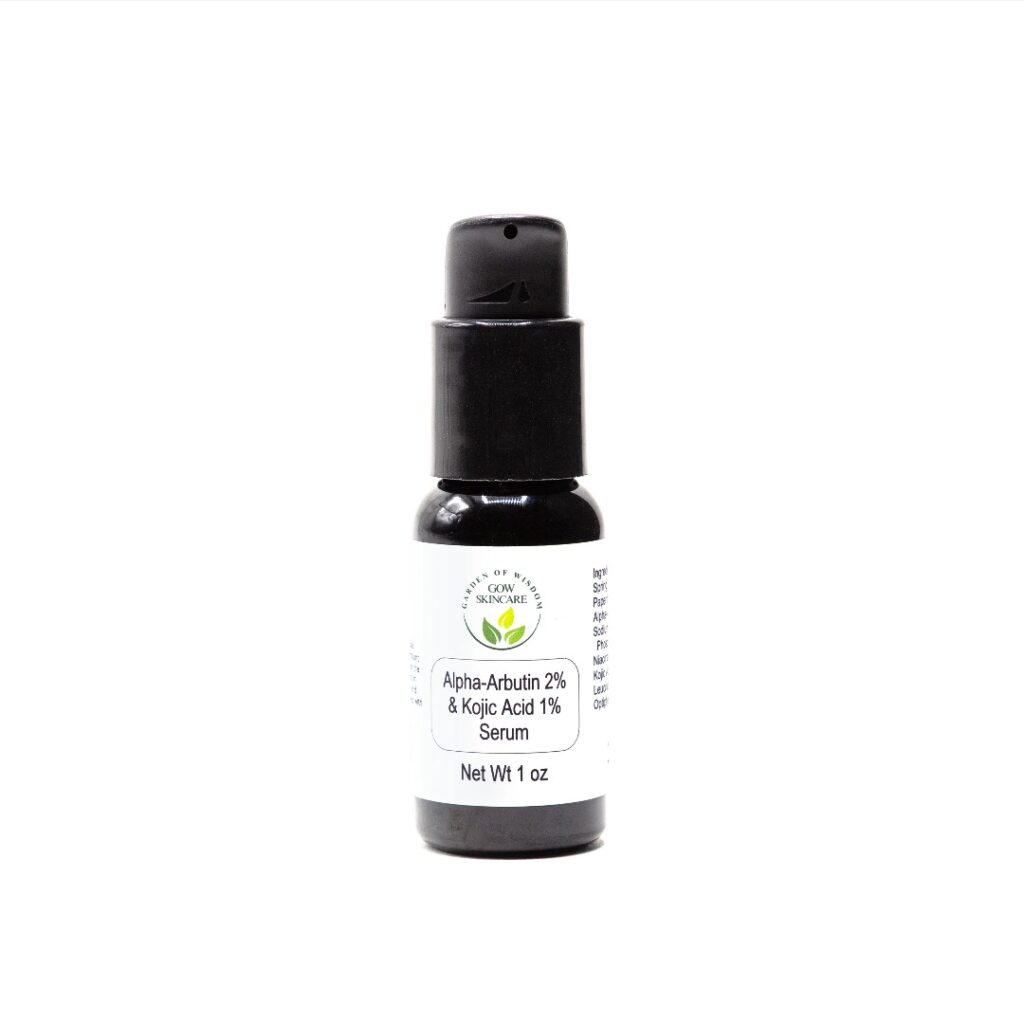
When standard alpha arbutin serums have not moved persistent dark spots despite consistent use, the issue is usually that a single pathway of melanin inhibition is insufficient for the degree of hyperpigmentation present. The Garden of Wisdom formula responds to this by combining alpha arbutin’s tyrosinase inhibition with kojic acid’s different but compatible tyrosinase-blocking mechanism, creating a dual-pathway approach that is more difficult for the skin’s melanin production system to work around.
Niacinamide adds a third mechanism by inhibiting melanosome transfer, the step where melanin moves from the cell where it was produced to the surface skin cells that make it visible. Paper Mulberry contributes additional antioxidant and tyrosinase-inhibiting properties. For skin dealing with melasma, deep post-inflammatory marks, or hyperpigmentation that standard alpha arbutin and propolis for hyperpigmentation approaches have not fully resolved, this is the most comprehensively targeted formula on this list.
Pros:
- Alpha arbutin and kojic acid inhibit melanin production through two separate pathways
- Niacinamide adds melanosome transfer inhibition as a complementary third mechanism
- Paper Mulberry provides additional brightening and antioxidant support
- Most appropriate formula for melasma, stubborn dark spots, and long-standing pigmentation
Cons:
- Kojic acid increases photosensitivity, making evening application and morning SPF essential
- Multi-active formula should be introduced gradually for sensitive or reactive skin types
4. The Ordinary Alpha Arbutin 2% Plus HA
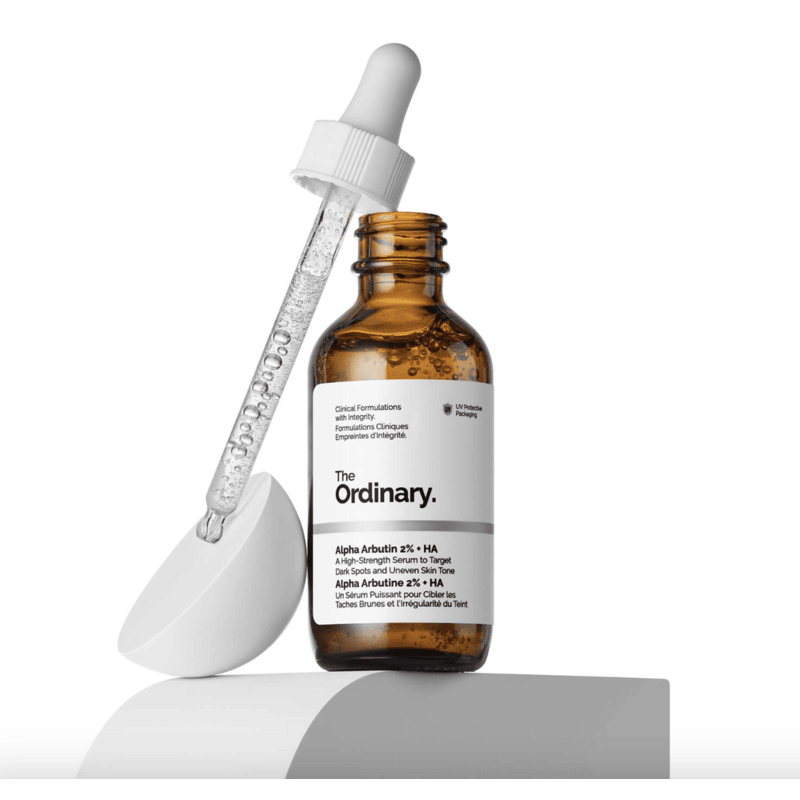
The Ordinary’s approach to alpha arbutin is defined by one technical detail that sets it apart from many comparable products: pH optimisation. Alpha arbutin is notoriously unstable in water-based formulas at the wrong pH, degrading rapidly and significantly reducing the active concentration available to the skin by the time of application. The Ordinary specifically formulates at the pH level demonstrated to minimise this degradation, which means the 2% stated on the label is actually present and active in the formula when it reaches your skin.
For anyone building a clean, no-conflict alpha arbutin and propolis for hyperpigmentation routine, this formula slots in without friction. No competing actives, no complicated layering considerations, just stable, effective alpha arbutin and hyaluronic acid doing their jobs reliably.
Pros:
- pH-optimised formula prevents alpha arbutin degradation for reliable active concentration
- Hyaluronic acid supports absorption and delivers hydration alongside brightening
- Minimal, clean formula layers without conflict under any other product in the routine
- Consistent formulation quality and widely available for reliable repurchase
Cons:
- Minimal formula is better suited to maintenance and mild pigmentation than advanced dark spots
- Those needing more aggressive multi-pathway treatment should consider the Garden of Wisdom formula
5. COSRX Alpha-Arbutin 2% Discoloration Care Serum
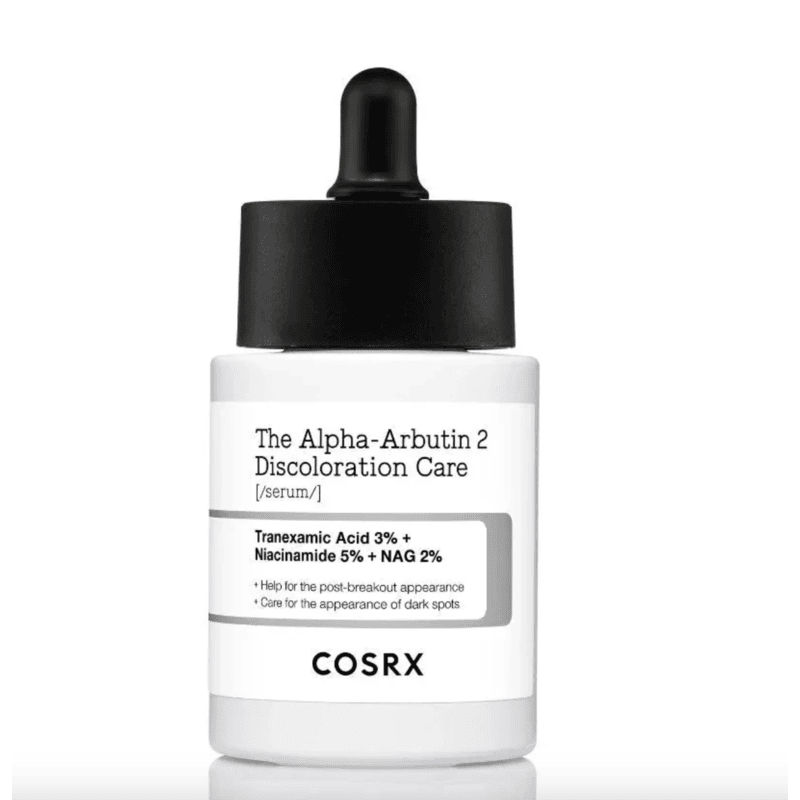
The COSRX Alpha-Arbutin 2% Discoloration Care Serum is a natural partner for the COSRX Propolis Synergy Toner because both products share the same formulation philosophy: clean, effective, no unnecessary complexity. The lightweight, water-thin serum absorbs almost immediately and carries no risk of layering conflict with the propolis toner applied before it.
Beyond the practical pairing advantage, the serum is genuinely effective at its core purpose. The 2% alpha arbutin targets tyrosinase directly, fading post-inflammatory marks, sun spots, and acne scarring progressively with consistent daily application. The clean formula means its results are straightforwardly attributable to the active rather than complicated by interactions with multiple additional ingredients.
Pros:
- Shares formulation philosophy with COSRX Propolis Toner for natural same-brand pairing
- Water-thin texture absorbs immediately with no layering conflict under other products
- 2% Alpha Arbutin directly targets dark spots, post-inflammatory marks, and sun damage
- Clean, dermatologist-trusted formula with consistent availability in Nigeria
Cons:
- Single-active formula best suited to mild to moderate hyperpigmentation concerns
- Results develop progressively over four to eight weeks and require daily consistency
The Routine in Practice
Morning: Cleanse, COSRX Propolis Synergy Toner, your chosen alpha arbutin serum, moisturise, SPF. Never skip the SPF. Every morning without sun protection partially reverses the melanin inhibition your routine is building overnight.
Evening: Cleanse, COSRX Propolis Synergy Toner, your chosen alpha arbutin serum, moisturise. If using the Garden of Wisdom or Cosmo serum with kojic acid or AHA, keep those in the evening specifically and apply SPF the following morning without exception.
All products in this alpha arbutin and propolis for hyperpigmentation guide are available at Perona Beauty. Visit us at Praise Plaza, 26 Osuntokun Avenue, Opposite House 25, Bodija, Ibadan, and our team will help you select the right combination for your specific pigmentation concern.
Frequently Asked Questions
How long does alpha arbutin and propolis for hyperpigmentation take to show results? Mild post-inflammatory marks typically begin to fade within four to six weeks of consistent daily use. Deeper or more established hyperpigmentation shows significant improvement over eight to twelve weeks. Melasma requires three to six months and benefits from the Garden of Wisdom multi-mechanism formula. Daily SPF use throughout is essential to prevent UV from reversing the progress being made.
Is this combination safe for melanin-rich and dark skin tones? Yes, and it is specifically well-suited to them. Alpha arbutin’s gentle mechanism avoids the paradoxical darkening risk associated with hydroquinone in melanin-rich skin. Propolis reduces the reactive inflammation that causes melanin-rich skin to produce excess pigmentation in response to triggers. The combination is one of the safer and more effective approaches available for alpha arbutin and propolis for hyperpigmentation in deeper skin tones.
Can I use alpha arbutin and propolis for hyperpigmentation alongside retinol? Yes. Apply the propolis toner and alpha arbutin serum in the morning. Use retinol in the evening. Retinol accelerates cell turnover, shedding pigmented surface cells faster and amplifying the brightening progress the alpha arbutin is making. The combination of all three, propolis for inflammation, arbutin for melanin inhibition, retinol for renewal, is one of the most complete hyperpigmentation routines available in topical skincare.
Which product is best for post-acne dark marks specifically? For post-inflammatory hyperpigmentation from acne, the COSRX Alpha-Arbutin 2% Serum paired with the COSRX Propolis Toner is the most directly targeted combination. If the marks are deep or slow to respond, upgrading to the Garden of Wisdom formula adds the multi-pathway approach that stubborn post-acne pigmentation benefits from most.
Do I need all five alpha arbutin products? No. Choose one alpha arbutin serum based on your hyperpigmentation severity and skin type, pair it with the COSRX Propolis Toner, and use both consistently every day. Start with the Skin By Zaron or The Ordinary formula for mild pigmentation and accessibility. Move to the Garden of Wisdom formula if results plateau or if your concern is melasma or deeply established pigmentation. The alpha arbutin and propolis for hyperpigmentation combination works with one serum from each category, not all of them simultaneously.