

Azelaic acid or vitamin C for dark spots are the two recommendations that appear most consistently in skincare conversations about hyperpigmentation, and yet very little explanation accompanies either. Most content either picks a side without nuance or recommends both without explaining which one suits which skin type, which dark spot origin, or which stage of a skincare routine.
This guide fills that gap with a precise, practical comparison that tells you exactly when to choose azelaic acid, when to choose Vitamin C, and when to use both intelligently.
What Dark Spots Actually Are
Understanding the biology of dark spots makes the azelaic acid or vitamin C for dark spots comparison immediately more useful.
Dark spots form when melanocytes, the pigment-producing cells in the skin, are overstimulated and produce more melanin than the surrounding skin. Three primary triggers cause this overstimulation: UV radiation, which directly activates melanocytes as a protective response; inflammation from breakouts, wounds, or chronic skin irritation; and hormonal changes that sensitise specific melanocyte populations, as in melasma.
The type of trigger matters for the azelaic acid or vitamin C for dark spots decision because different triggers respond to different treatment mechanisms. UV-driven dark spots respond best to UV protection combined with tyrosinase inhibition. Inflammation-driven marks respond best to anti-inflammatory treatment combined with melanocyte regulation. Hormonal melasma benefits from selective melanocyte suppression.
Vitamin C and azelaic acid each address specific points in this process, which is why the correct choice depends on which trigger is creating your dark spots.
How Vitamin C Treats Dark Spots
Vitamin C inhibits tyrosinase, the enzyme that converts the amino acid tyrosine into melanin, progressively reducing the melanin content in affected cells as they naturally cycle out. Over four to twelve weeks of consistent daily use, existing dark spots fade because the skin cells replacing the pigmented ones contain progressively less melanin.
More importantly for the azelaic acid or vitamin C for dark spots comparison, Vitamin C is a potent antioxidant that neutralises free radicals generated by UV radiation in real time. UV-generated free radicals are one of the primary triggers of melanocyte activation, which means morning Vitamin C use actively prevents the UV-driven formation of new dark spots while simultaneously fading existing ones.
This prevention function is what makes Vitamin C uniquely appropriate for morning application in any azelaic acid or vitamin C for dark spots strategy. No other commonly available brightening ingredient combines active dark spot treatment with real-time UV-driven prevention in the same application.
How Azelaic Acid Treats Dark Spots
Azelaic acid inhibits tyrosinase through a mechanism that is more selective than Vitamin C’s. Rather than broadly reducing tyrosinase activity across all melanocytes, azelaic acid specifically targets the hyperactive melanocytes producing abnormal amounts of melanin while leaving normally functioning ones less affected. This selective inhibition is clinically significant for azelaic acid or vitamin C for dark spots decisions involving post-inflammatory hyperpigmentation and melasma, where specific melanocyte populations are over-activated rather than the entire skin surface.
Azelaic acid also suppresses the inflammatory pathways that cause post-inflammatory hyperpigmentation to form in the first place. For skin dealing with breakout-produced dark marks, azelaic acid treats the existing pigmentation while simultaneously reducing the inflammation that is creating new marks from active blemishes. This dual action on cause and existing effect is azelaic acid’s primary advantage in the azelaic acid or vitamin C for dark spots comparison for acne-prone skin.
When to Choose Each One
Choose Vitamin C when:
Your dark spots are primarily UV-driven: sun spots, general tanning, and the uneven tone that accumulates from years of daily sun exposure. Your morning routine needs antioxidant protection to prevent new UV-driven pigmentation. Your skin tolerates acidic actives without significant irritation. Collagen stimulation alongside brightening is also a goal.
Choose Azelaic Acid when:
Your dark spots are primarily post-inflammatory from breakouts or skin irritation. You have melasma or hormonal pigmentation. Your skin is sensitive, reactive, or rosacea-prone and does not tolerate Vitamin C’s acidity. You are pregnant and need a safe brightening active. You have melanin-rich skin where unstabilised Vitamin C can cause discolouration issues.
Choose both when:
Your dark spots have mixed origins, which is the most common real-world scenario. Morning Vitamin C protects against UV-driven formation and addresses surface pigmentation. Evening azelaic acid targets hyperactive melanocytes and reduces inflammatory triggers. The combined azelaic acid or vitamin C for dark spots approach covers more of the hyperpigmentation pathway than either alone.
8 Differences Between Azelaic Acid and Vitamin C for Dark Spots
- Vitamin C prevents UV-driven new dark spots. Azelaic acid does not. In the azelaic acid or vitamin C for dark spots comparison for prevention rather than treatment, Vitamin C has a clear functional advantage.
- Azelaic acid directly addresses inflammation-driven dark spots. Vitamin C does not. For post-breakout marks, azelaic acid treats both the cause and the pigmentation simultaneously.
- Vitamin C degrades quickly without proper packaging. Azelaic acid is significantly more stable across heat and light exposure, which matters in Nigeria’s warm climate.
- Azelaic acid is safer for sensitive skin. Vitamin C’s acidity makes it more likely to cause irritation in reactive skin, giving azelaic acid the advantage in the azelaic acid or vitamin C for dark spots decision for compromised skin.
- Vitamin C stimulates collagen alongside brightening. Azelaic acid does not have the same documented collagen benefit, making Vitamin C more multi-functional for anti-ageing concerns alongside dark spot treatment.
- Azelaic acid is explicitly safe during pregnancy. Both are generally considered low-risk topically, but azelaic acid has more robust clinical documentation for pregnancy safety.
- Vitamin C is most effective in the morning. Azelaic acid is equally effective morning or evening. This timing flexibility makes azelaic acid more versatile for routine building in the azelaic acid or vitamin C for dark spots decision.
- Azelaic acid selectively targets hyperactive melanocytes. Vitamin C inhibits tyrosinase broadly. For melasma and post-inflammatory hyperpigmentation, selective inhibition is more clinically appropriate.
6 Products for the Azelaic Acid or Vitamin C for Dark Spots Decision
Vitamin C Products
1. Dang Vitamin C Concentrated Serum — Best for UV-Driven Dark Spots
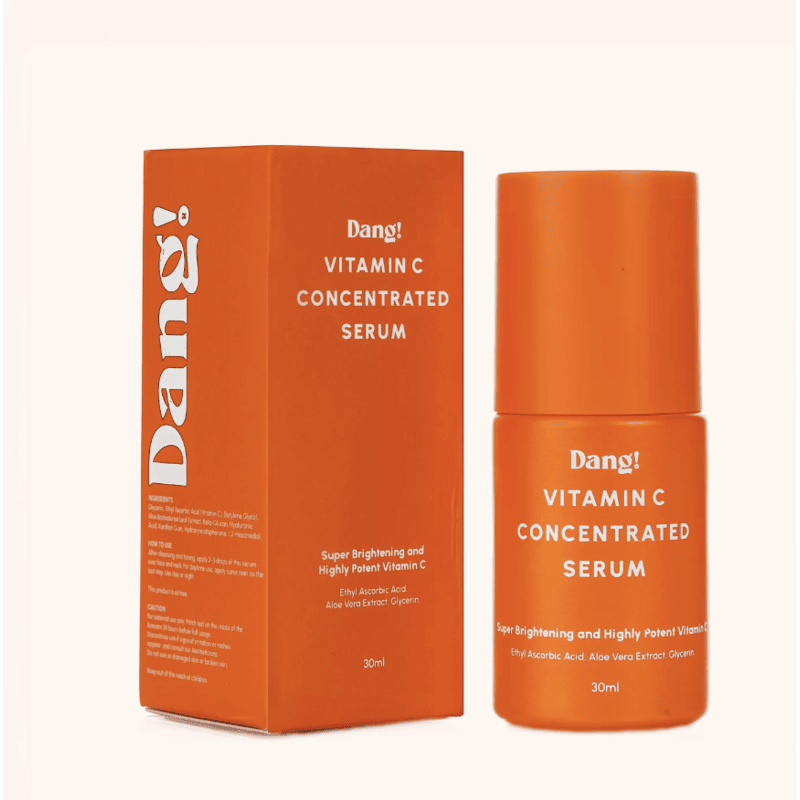
The Dang Vitamin C Concentrated Serum sits on the Vitamin C side of the azelaic acid or vitamin C for dark spots comparison for skin dealing with UV-accumulated pigmentation and general dullness from sun exposure. Its antioxidant-rich formula delivers the tyrosinase inhibition and free radical neutralisation that make Vitamin C the most strategic morning brightening ingredient for Nigeria’s consistently high UV environment.
Applied before SPF each morning, it positions Vitamin C’s dual treatment-and-prevention function at the point of maximum relevance: directly before the UV exposure that drives melanocyte activation. For the azelaic acid or vitamin C for dark spots decision on skin primarily affected by sun exposure rather than breakouts, this product represents the more targeted choice.
Pros:
- Vitamin C and antioxidants address UV-driven dark spots and prevent new formation through real-time free radical neutralisation
- Oil-free formula suits oily and combination skin for daily morning use in warm, humid conditions
- Targets uneven tone, dark spots, and dullness with the core brightening mechanism Vitamin C provides
- Practical for Nigeria’s consistently high-UV environment where morning antioxidant protection is essential
Cons:
- Concentrated Vitamin C requires proper storage to prevent oxidation in Nigeria’s heat
- May produce initial tingling in sensitised skin during the first two weeks of use
2. Balance Active Formula 5% Vitamin C Brightening Serum — Best Stabilised Vitamin C for Sensitive Skin
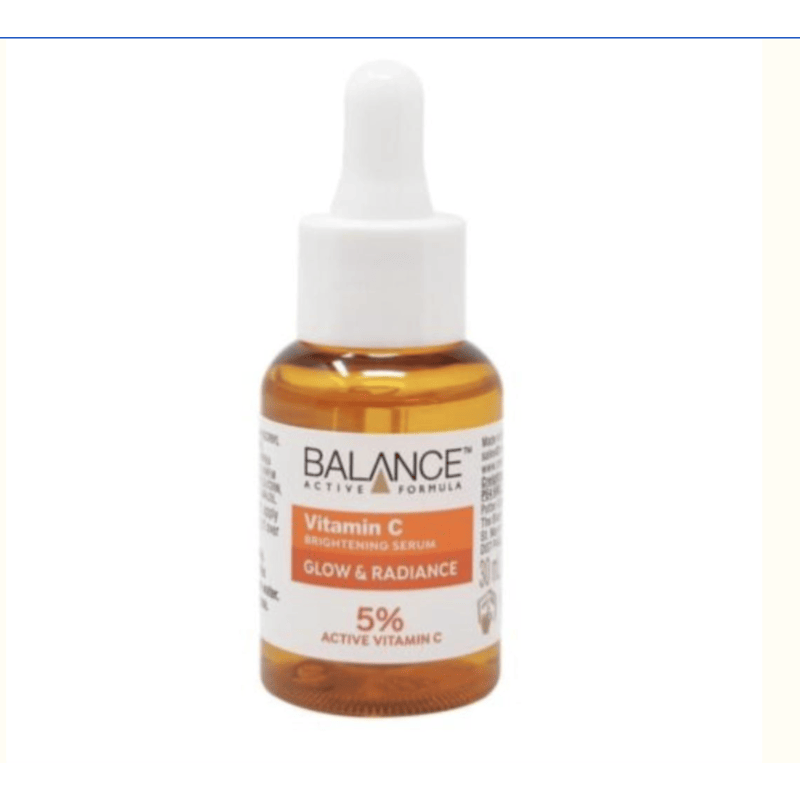
The Balance Active Formula 5% Vitamin C Brightening Serum resolves the sensitivity barrier that often pushes people toward azelaic acid in the azelaic acid or vitamin C for dark spots comparison by formulating with three stabilised Vitamin C derivatives rather than pure ascorbic acid. Ascorbyl Glucoside, Sodium Ascorbyl Phosphate, and additional stabilised complex forms are significantly gentler and more stable than pure ascorbic acid.
For melanin-rich Nigerian skin specifically, stabilised derivatives also reduce the risk of the oxidative discolouration that unstabilised pure Vitamin C can produce when exposed to air. Vitamin E and Olive Leaf Extract provide complementary antioxidant support that extends the protective benefit of the formula. The 60ml size makes this one of the more practical value propositions for a daily-use Vitamin C serum.
Pros:
- Three stabilised Vitamin C derivatives deliver brightening without the irritation of pure ascorbic acid
- More stable formulation reduces oxidation risk, particularly relevant for Nigerian storage conditions
- Vitamin E and Olive Leaf Extract provide complementary antioxidant support
- 60ml size provides substantial daily-use value compared to smaller Vitamin C alternatives
Cons:
- Stabilised derivatives are less potent than pure ascorbic acid for those seeking fastest results
- 5% total concentration produces gradual improvement suited to maintenance rather than rapid correction
3. OOTD Dark Spot Vitamin C Serum — Best Accessible Starting Point for Vitamin C Dark Spot Treatment
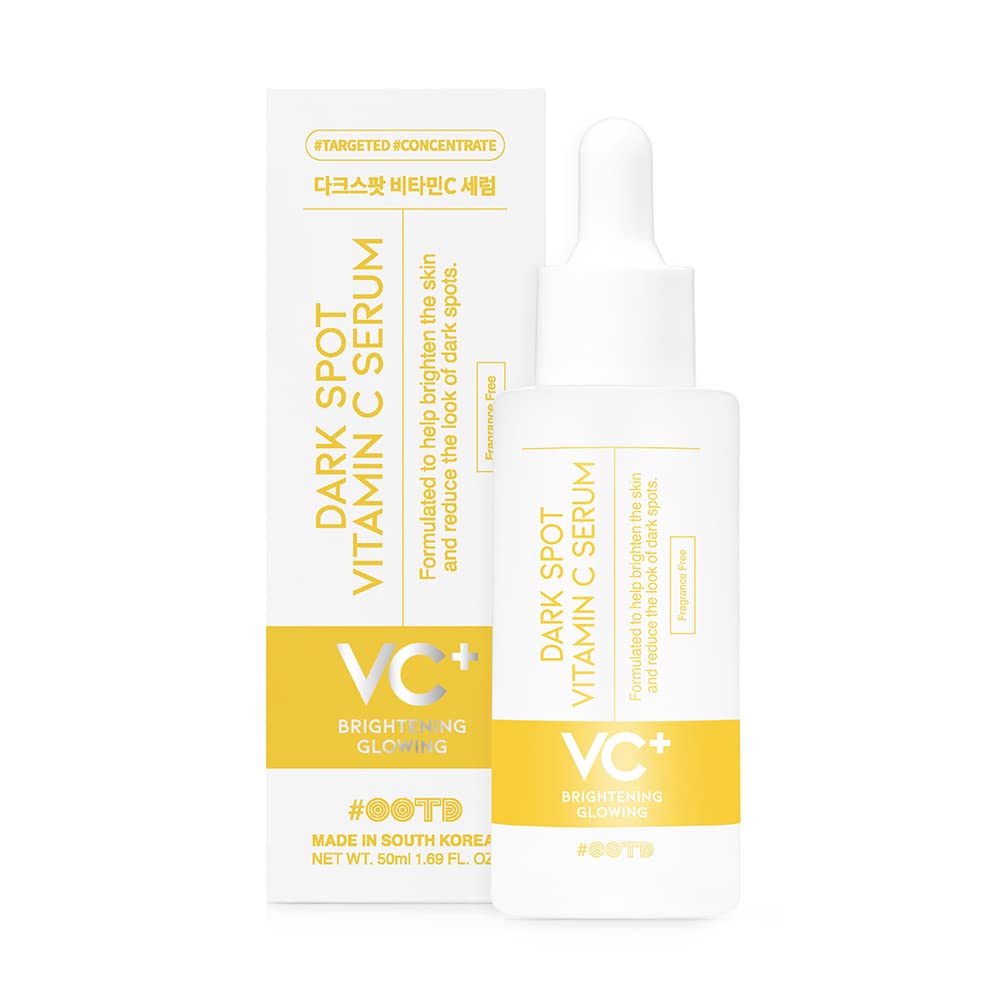
The OOTD Dark Spot Vitamin C Serum provides an accessible entry point for the Vitamin C side of the azelaic acid or vitamin C for dark spots decision without the investment required by premium formulations. Formulated with Vitamin C for dark spot fading and radiance enhancement, it addresses the core concerns that make Vitamin C relevant in the first place.
For someone new to active brightening who wants to evaluate Vitamin C before committing to higher-concentration alternatives, this product provides the daily morning Vitamin C exposure that builds the antioxidant protection and progressive brightening that makes Vitamin C effective in any azelaic acid or vitamin C for dark spots approach.
Pros:
- Vitamin C addresses dark spots and uneven tone with the core brightening mechanism the ingredient provides
- Accessible pricing makes consistent daily Vitamin C use practical for building a brightening routine
- Suitable for daily morning use as the antioxidant and brightening step before SPF application
- Appropriate starting point before investing in higher-concentration premium formulations
Cons:
- Limited detail on Vitamin C type and percentage makes efficacy benchmarking more difficult
- Better positioned as an introductory product than a long-term high-performance brightening serum
Azelaic Acid Products
4. Medicube Azelaic Acid 16 BB Soothing Serum — Best for Blemish-Related Dark Spots
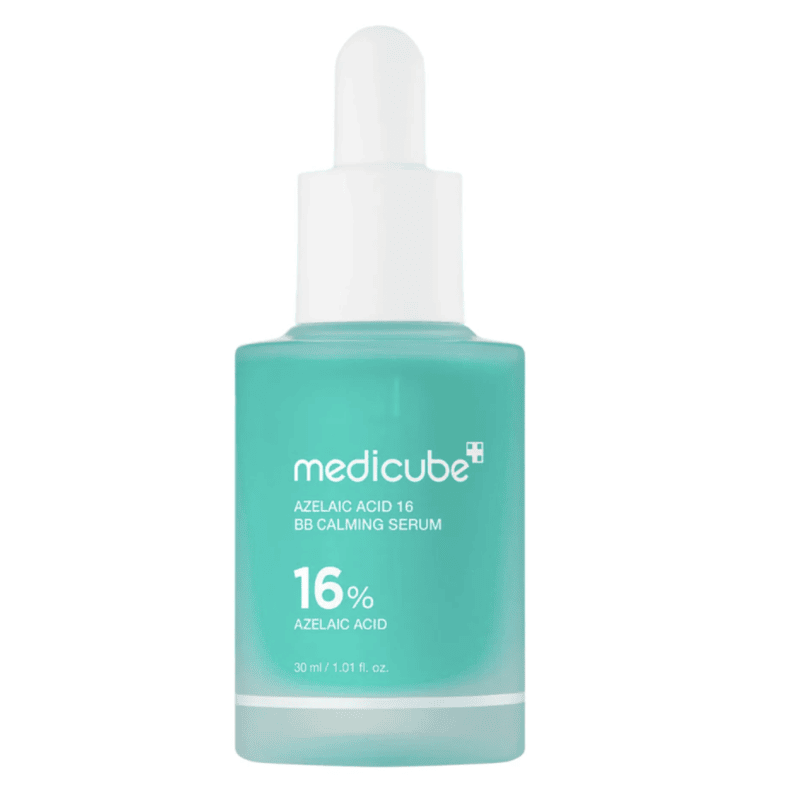
The Medicube Azelaic Acid 16 BB Soothing Serum specifically addresses the azelaic acid or vitamin C for dark spots scenario where dark spots are produced by active breakouts. Its formulation focuses on azelaic acid’s dual action: reducing the inflammation that creates post-breakout dark marks and inhibiting the excess melanin production in the affected area.
For acne-prone skin dealing with both active blemishes and the dark spots from previous ones, this serum addresses the complete problem in one step, treating existing marks while reducing the inflammatory environment that produces new ones. This is where the azelaic acid or vitamin C for dark spots comparison decisively favours azelaic acid over Vitamin C.
Pros:
- Azelaic acid addresses both the inflammation causing new post-breakout dark spots and existing hyperpigmentation
- Soothing formula is appropriate for blemish-prone and sensitive skin during active breakout periods
- Reduces redness and uneven tone alongside dark spot fading for complete blemish skin improvement
- Lightweight texture suitable for daily use on combination and acne-prone skin
Cons:
- 30ml size runs out quickly with twice-daily consistent use
- Less appropriate for UV-driven sun spots where Vitamin C’s antioxidant prevention is more relevant
5. Anua Azelaic 10 Hyaluronic Acid Redness Soothing Pad — Best Format for Gentle Azelaic Acid Dark Spot Treatment
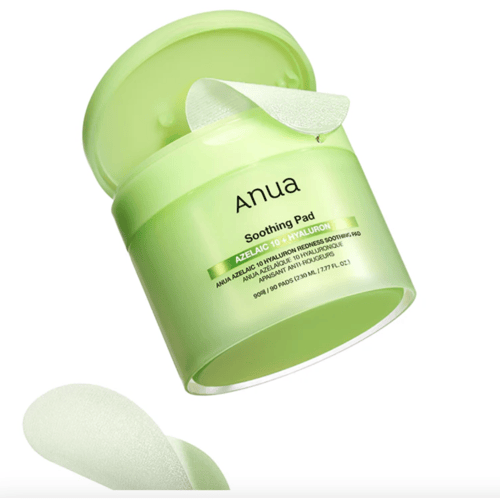
The Anua Azelaic 10 Hyaluronic Acid Redness Soothing Pad brings an innovative delivery format to the azelaic acid or vitamin C for dark spots discussion, delivering azelaic acid as a pad that functions as both a toner and a mini treatment mask depending on how long it is left on the skin.
The 7-Cica Complex, Ceramide NP, Panthenol, and Bisabolol provide barrier support and calming benefits that make this the most comprehensive azelaic acid product on this list for skin that needs both dark spot treatment and barrier repair simultaneously. Multiple hyaluronic acid forms deliver hydration at different skin depths alongside the azelaic acid activity.
Pros:
- Azelaic acid in a pad format provides flexible application as a toner or an intensive short treatment
- 7-Cica Complex and barrier ingredients address skin barrier health alongside dark spot treatment
- Multiple HA forms deliver multi-depth hydration with the azelaic acid dark spot treatment
- Most comprehensive barrier-supporting delivery of azelaic acid in the azelaic acid or vitamin C for dark spots product range
Cons:
- Pad format is less precise for controlled product quantity than traditional serum application
- Multi-ingredient formula makes it harder to attribute specific results to the azelaic acid specifically
6. Revox B77 Just Azelaic Acid 10% — Best Pure Azelaic Acid for Dark Spot Evaluation
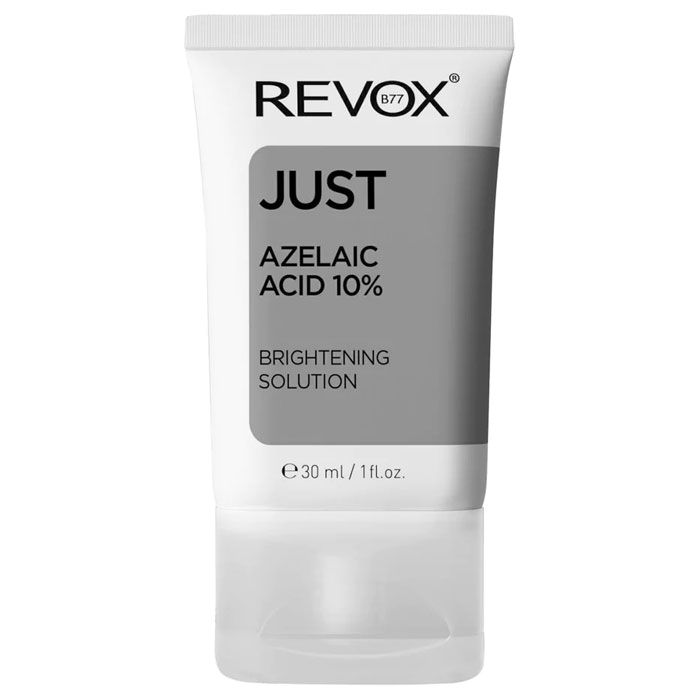
The Revox B77 Just Azelaic Acid 10% is the cleanest, most evaluable product in the azelaic acid section of the azelaic acid or vitamin C for dark spots comparison. At 10% in a minimal base, it delivers the active’s core benefits without additional variables, making it the best choice for anyone who wants to understand what azelaic acid specifically contributes to their dark spot treatment.
For skin that has tried Vitamin C without adequate results, or that cannot tolerate Vitamin C’s acidity, this formula provides the most direct evaluation of whether azelaic acid offers a better answer to the azelaic acid or vitamin C for dark spots question for their specific skin and dark spot type.
Pros:
- Single-focus 10% azelaic acid allows clear evaluation of the ingredient’s dark spot contribution
- Addresses redness, texture, and hyperpigmentation through azelaic acid’s core mechanisms only
- Compatible with morning or evening application due to azelaic acid’s low photosensitivity profile
- Minimal formula layers without conflict under any routine product
Cons:
- No supporting hydration or complementary brightening actives within the formula
- Better suited to ingredient evaluation than multi-concern treatment in a single product
The Best Approach to Azelaic Acid or Vitamin C for Dark Spots
For most Nigerian skin dealing with hyperpigmentation from a combination of UV exposure and post-breakout marks, the optimal azelaic acid or vitamin C for dark spots strategy uses both:
Morning: Vitamin C serum for antioxidant UV protection and surface brightening, followed by SPF.
Evening: Azelaic acid serum for selective melanocyte targeting, anti-inflammatory dark spot prevention, and progressive fading.
If only one ingredient is possible, match the choice to the dominant dark spot origin. UV-driven spots with no active acne: choose Vitamin C. Post-breakout marks or sensitive skin: choose azelaic acid.
All six products featured in this azelaic acid or vitamin C for dark spots guide are available at Perona Beauty in Ibadan. Visit us at Praise Plaza, 26 Osuntokun Avenue, Opposite House 25, Bodija, Ibadan, where our team will help you determine the most appropriate approach for your skin type and dark spot concern.
Match the Ingredient to the Spot and the Routine Will Work
The azelaic acid or vitamin C for dark spots comparison does not have a winner. It has a correct answer for each specific situation. UV-driven dullness and sun spots respond best to Vitamin C’s antioxidant prevention and tyrosinase inhibition applied in the morning. Post-inflammatory marks and sensitive skin respond best to azelaic acid’s selective anti-inflammatory targeting applied morning or evening. Both together address the full spectrum of hyperpigmentation formation that most Nigerian skin is dealing with simultaneously.
The six products in this guide cover both sides of the azelaic acid or vitamin C for dark spots decision comprehensively: Dang, Balance Active, and OOTD for the Vitamin C side; Medicube, Anua, and Revox B77 for the azelaic acid side. Choose based on your skin type and dark spot origin, use consistently with daily SPF, and give the routine the eight to twelve weeks of consistent application that the biology of hyperpigme
Frequently Asked Questions About Azelaic Acid or Vitamin C for Dark Spots
Which fades dark spots faster, azelaic acid or Vitamin C?
Neither produces significantly faster results than the other for comparable dark spot types. Both require four to twelve weeks of consistent daily use before meaningful fading becomes visible. The relevant comparison in azelaic acid or vitamin C for dark spots is not speed but suitability: Vitamin C for UV-driven spots, azelaic acid for inflammatory marks. Choosing based on suitability rather than speed produces better results from either ingredient.
Can I use both azelaic acid and Vitamin C in the same routine?
Yes, and it is the recommended approach for comprehensive dark spot treatment. Apply Vitamin C in the morning for antioxidant prevention and azelaic acid in the evening for selective melanocyte targeting. Do not apply them simultaneously in the same step as both are acidic and combined application increases irritation risk without improving results.
Is azelaic acid or Vitamin C better for Nigerian skin specifically?
Both can be used effectively on Nigerian skin. Azelaic acid carries fewer risk variables for melanin-rich skin because its stable formulation does not oxidise and produce discolouration the way unstabilised Vitamin C can. The azelaic acid or vitamin C for dark spots recommendation for Nigerian skin is azelaic acid as the primary treatment with stabilised Vitamin C derivatives as the morning antioxidant component.
Do I need prescription-strength azelaic acid for dark spots?
No. Ten percent over-the-counter azelaic acid produces meaningful results for post-inflammatory hyperpigmentation and uneven tone with consistent daily use. Prescription 15 to 20 percent concentrations are used for more severe rosacea or stubborn melasma under dermatological supervision. For the typical azelaic acid or vitamin C for dark spots scenario, 10% is effective as an accessible starting point.