

Sunspots do not arrive overnight. They accumulate quietly over years of sun exposure, building from the gradual overactivation of melanocytes that Nigerian sun conditions accelerate faster than in lower-UV climates. By the time most people notice them and start looking for ways to get rid of sunspots, they have been forming for years, which is why they require months of consistent targeted treatment rather than weeks of sporadic effort.
This guide explains exactly how to get rid of sunspots with the right approach, the right ingredient combinations, and six products that address every layer of treatment and prevention.
Why Sunspots Are Different From Other Dark Spots
Understanding what makes sunspots distinct from other forms of hyperpigmentation shapes how you approach treatment and what realistic expectations you should have for the timeline to get rid of sunspots.
Post-inflammatory hyperpigmentation follows a specific inflammatory event: a breakout, friction, a cut, or a procedure. The melanin overproduction is reactive and localised. Once the inflammation resolves and treatment begins, the skin responds relatively quickly because the trigger has been removed.
Sunspots are different. They form from the cumulative, repeated activation of melanocytes by UV radiation over months and years. In areas of concentrated melanocyte overactivation, the cells become persistently hyperstimulated, continuing to overproduce melanin even without ongoing direct UV exposure. The melanin accumulation is often deeper within the epidermis and more established structurally than the surface-level marks that post-inflammatory pigmentation produces.
This is why strategies to get rid of sunspots require longer timelines, more consistent application, and often combination active approaches that target multiple stages of the melanin production pathway rather than the single-mechanism treatments that clear post-acne marks more quickly.
The other defining feature of sunspots is their relationship with ongoing UV exposure. Every unprotected day in the sun reactivates the melanocytes responsible for existing spots and creates conditions for new ones. Any strategy to get rid of sunspots that does not include daily SPF is fundamentally incomplete.
The Ingredients That Get Rid of Sunspots at Every Level
Vitamin C at 15% provides both antioxidant protection and direct tyrosinase inhibition, addressing sunspot formation and existing pigmentation simultaneously in the morning routine when UV exposure is the active threat.
Alpha Arbutin at 5% inhibits tyrosinase more gently than hydroquinone through direct enzyme binding, producing consistent, low-irritation melanin reduction that makes it one of the most appropriate ingredients to get rid of sunspots on all skin types including darker tones.
Niacinamide at 10% blocks melanosome transfer, the step where melanin produced in melanocytes moves to the surface cells where it becomes visible. It does not stop melanin from being made but prevents it from reaching the skin surface.
Tranexamic Acid at 4% targets the UV-triggered keratinocyte signalling that instructs melanocytes to produce excess melanin, interrupting the photoactivation mechanism that makes sunspots UV-specific.
Azelaic Acid at 10% inhibits tyrosinase with a gentler mechanism than stronger acids and has anti-inflammatory properties that make it suitable for sensitive and reactive skin types trying to get rid of sunspots without risking further irritation.
Glycolic Acid at 7% accelerates cell turnover to shed pigmented surface cells faster, supporting the visible clearing work that tyrosinase inhibitors and transfer blockers are doing at deeper levels.
7 Reasons Your Sunspot Treatment Is Not Working
- You are not using SPF every day. UV exposure daily re-activates the melanocytes responsible for sunspots. Without SPF, your brightening products are competing against active spot formation.
- Your brightening active concentration is too low. Products with trace amounts of arbutin or niacinamide produce trace results. Meaningful concentrations, 5% arbutin, 10% niacinamide, 4% TXA, are needed to get rid of sunspots visibly.
- You are using only one brightening mechanism. Single-active approaches address one point in the melanin pathway. Combination approaches that target production, transfer, and surface clearance produce faster visible improvement.
- You are not allowing enough time. Four weeks is not enough to get rid of sunspots that have formed over years. Three to six months of consistent daily treatment is the realistic timeline for significant visible fading.
- You are applying products to already-protected skin. Brightening serums need clean skin contact to absorb properly. Applying over SPF or after a heavy moisturiser reduces their efficacy significantly.
- You are being inconsistent. Skipping three days per week halves the effective treatment time. To get rid of sunspots, the brightening routine needs to be applied daily without significant gaps.
- You are expecting topical products to address very deep pigmentation. Sunspots with significant epidermal depth may respond only partially to topical treatment and may benefit from professional procedures like IPL or chemical peels alongside topical management.
The 6 Best Products to Get Rid of Sunspots
1. Skin By Zaron 15% Vitamin C Serum — Best Morning Antioxidant to Get Rid of Sunspots
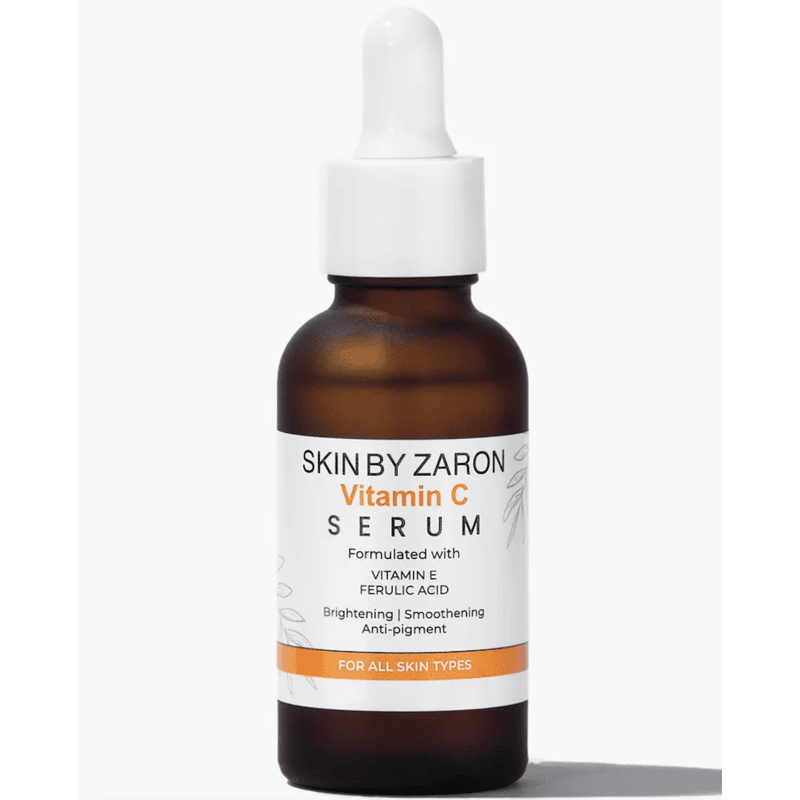
The morning routine is the most strategically important window for Vitamin C because its antioxidant function works in real time against the UV-generated free radicals that activate melanocytes and form new sunspots throughout the day. The Skin By Zaron 15% Vitamin C Serum delivers pure L-Ascorbic Acid at the concentration where clinical evidence consistently demonstrates visible improvement in sunspot fading, collagen support, and skin tone correction.
For anyone looking to get rid of sunspots in Nigeria’s intense UV climate, placing a high-concentration Vitamin C serum between cleansing and SPF every morning creates a protective and corrective layer that simultaneously fades existing spots and reduces the formation of new ones. The pure L-Ascorbic Acid formulation ensures maximum tyrosinase inhibition compared to less potent Vitamin C derivatives.
Pros:
- 15% L-Ascorbic Acid delivers maximum vitamin C brightening for visible sunspot fading
- Antioxidant function provides real-time protection against UV-triggered melanocyte activation
- Morning application positions brightening and protective benefits precisely when needed
- Boosts collagen production alongside sunspot treatment for comprehensive skin improvement
Cons:
- L-Ascorbic Acid formulations require careful storage away from heat and light to maintain potency
- Initial tingling is common for those introducing pure Vitamin C at this concentration
2. Cos De Baha Arbutin 5% Plus Licorice Serum — Best Multi-Active Serum to Get Rid of Sunspots
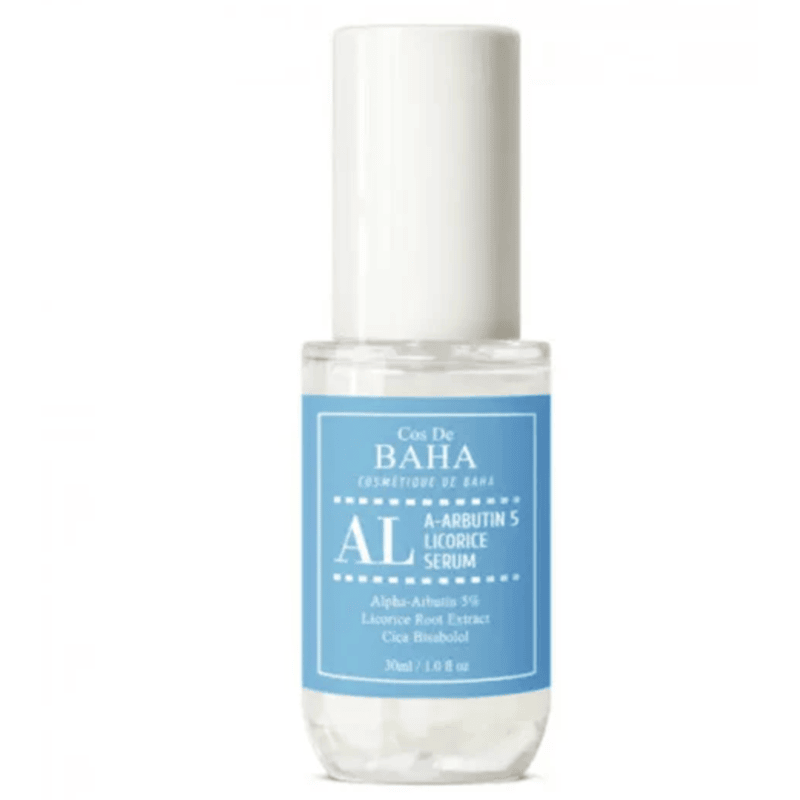
The Cos De Baha Arbutin 5% Plus Licorice Serum stands out as an evening brightening option to get rid of sunspots through its combination of high-concentration alpha arbutin with licorice root extract’s complementary glabridin activity. This dual-brightening approach addresses tyrosinase inhibition from two separate angles, while ceramide NP and Centella Asiatica ensure the skin barrier is protected during active treatment.
The 5% alpha arbutin concentration is meaningfully higher than the 2% commonly found in brightening serums, providing more significant melanin inhibition for the kind of established sunspots that lighter concentrations struggle to shift. Licorice root’s documented ability to inhibit UV-induced pigmentation makes this particularly relevant for sunspots specifically, as both its primary mechanism and its supporting actives target the UV component of pigmentation formation.
Pros:
- 5% alpha arbutin delivers significant tyrosinase inhibition for established sunspot fading
- Licorice root extract adds a complementary anti-pigmentation mechanism alongside arbutin
- Ceramide NP and Centella Asiatica protect barrier integrity during daily brightening treatment
- Hyaluronic acid maintains hydration for comfortable daily use in Nigeria’s warm climate
Cons:
- Visible results for established sunspots require consistent use over eight to twelve weeks minimum
- Best layered with complementary actives rather than used as the sole brightening product for significant spots
3. Anua Niacinamide 10% Plus TXA 4% Serum — Best for Stubborn Sunspots That Will Not Fade
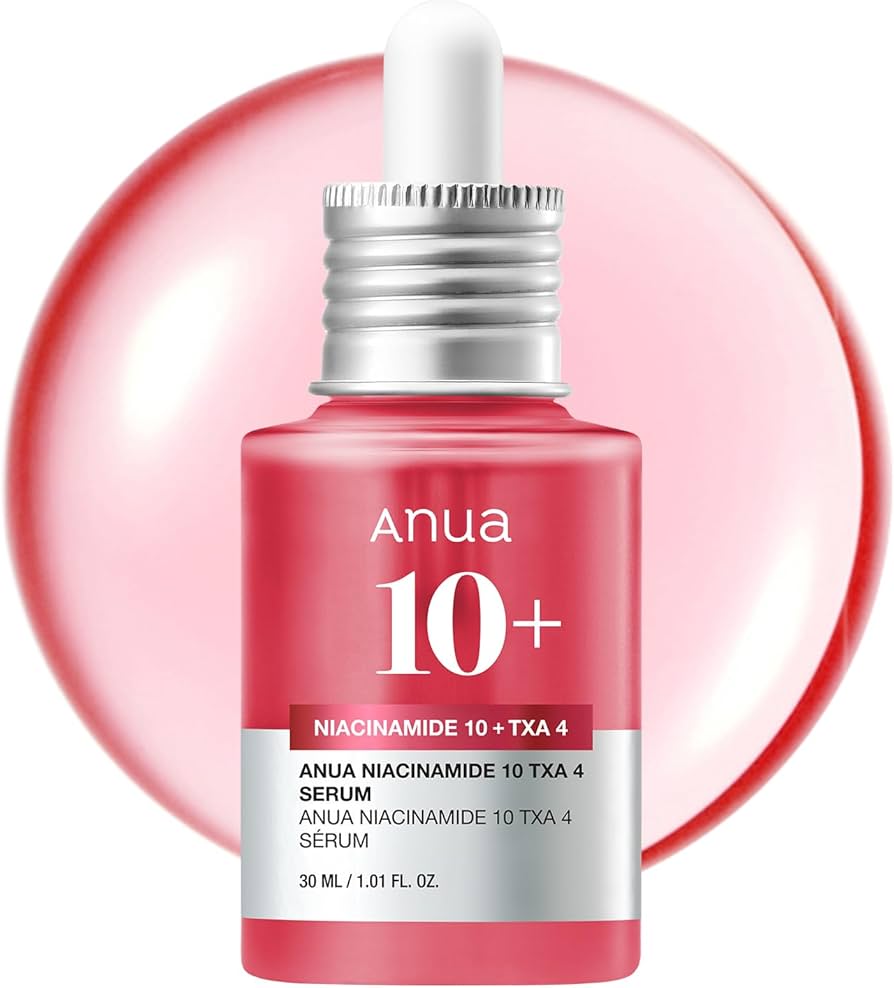
The Anua Niacinamide 10% Plus TXA 4% Serum is formulated for the sunspots that have resisted simpler brightening approaches, using two separate mechanisms that together address more of the sunspot pathway than either ingredient handles independently. The 10% niacinamide blocks the melanosome transfer that makes melanin visible at the skin surface. The 4% TXA interrupts the UV-triggered cellular signalling that overactivates melanocytes in the first place.
This combination means the serum is working on both the production side and the visibility side of sunspot formation simultaneously, which is why it produces more visible improvement on stubborn UV-induced pigmentation than single-active brightening serums. For anyone who has been trying to get rid of sunspots with lower-concentration products without adequate results, this dual-mechanism serum represents the logical escalation.
Pros:
- Niacinamide and TXA together target sunspot pigmentation at two separate stages of its pathway
- 10% niacinamide is clinically effective for visible melanosome transfer inhibition
- 4% TXA addresses the UV-activation step specifically relevant to sunspot formation
- Suitable for all skin types including sensitive skin that cannot tolerate stronger exfoliating actives
Cons:
- Multi-active formula requires consistent daily use over several months for established sunspot reduction
- Best used as an evening treatment to avoid any potential sensitivity with daytime sun exposure
4. Naturium Azelaic Topical Acid 10% — Best Gentle Option to Get Rid of Sunspots on Reactive Skin
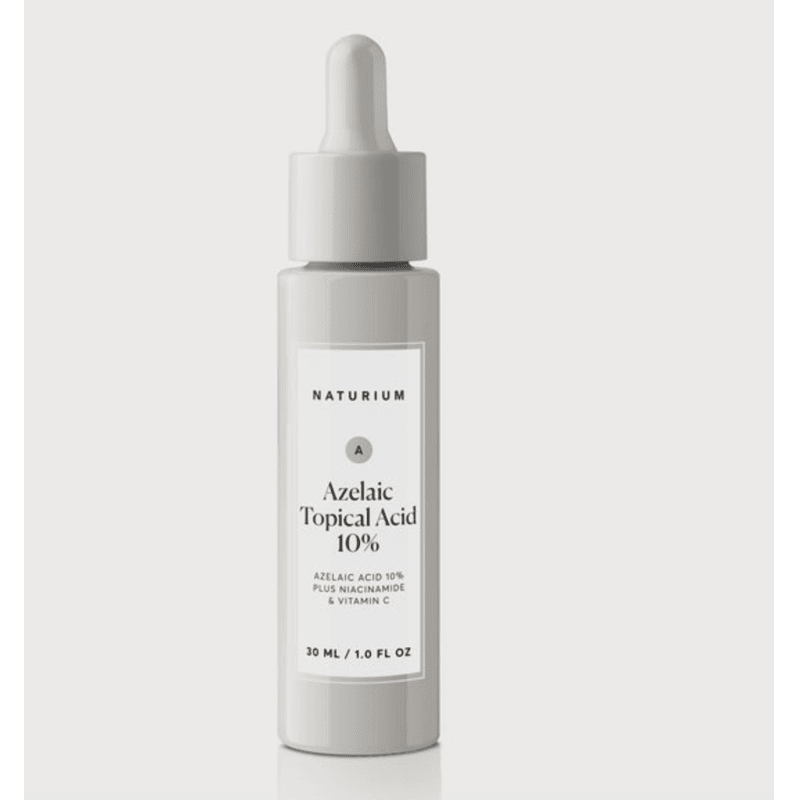
For skin that reacts to higher-potency brightening actives with redness, irritation, or additional pigmentation, the Naturium Azelaic Topical Acid 10% offers a gentler but genuinely effective path to get rid of sunspots. The glycinated azelaic acid complex delivers the tyrosinase inhibition and anti-inflammatory benefits of azelaic acid in a form optimised for skin tolerance, while the inclusion of niacinamide and Vitamin C within the same formula extends the brightening approach to melanosome transfer inhibition and antioxidant protection.
For skin in Nigeria dealing with sunspots alongside active sensitivity, rosacea, or the reactive pigmentation risk common in melanin-rich skin, this serum provides comprehensive brightening through mechanisms that carry a significantly lower risk of aggravating existing sensitivity than stronger AHA or pure Vitamin C approaches.
Pros:
- Glycinated azelaic acid complex reduces sunspots through a gentler tyrosinase inhibition mechanism
- Niacinamide and Vitamin C within the formula extend brightening through two additional pathways
- Anti-inflammatory properties reduce the redness and sensitivity that can accompany sunspot treatment
- Suitable for acne-prone and sensitive skin types where stronger brightening actives cause reactive pigmentation
Cons:
- Gentler mechanism produces more gradual sunspot reduction than higher-potency alternatives
- Multiple actives within one formula means patch testing is advisable before full-face introduction
5. The Ordinary Glycolic Acid 7% Exfoliating Toner — Best Exfoliant to Accelerate Sunspot Clearance
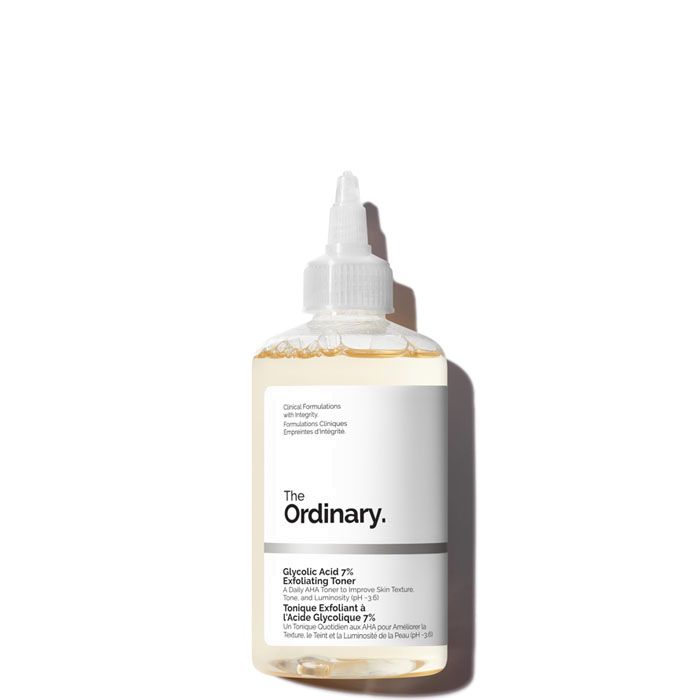
Physical clearance of pigmented surface cells is the dimension of sunspot treatment that tyrosinase inhibitors and transfer blockers cannot accomplish alone. The Ordinary Glycolic Acid 7% Exfoliating Toner adds this surface clearance dimension to the routine, shedding the melanin-loaded surface cells faster than natural cell turnover produces and bringing the freshly depigmented skin below to the surface more quickly.
Used in the evening, it works on the same biological cycle as the brightening serums applied alongside it, the skin’s overnight renewal activity, amplifying the visible speed of improvement without requiring additional active time. Tasmanian Pepperberry in the formula reduces the irritation response that glycolic acid commonly causes, while Aloe Vera provides soothing hydration. For anyone trying to get rid of sunspots faster by adding a surface clearance layer to their brightening routine, this toner is the most accessible and well-formulated option available.
Pros:
- 7% glycolic acid accelerates shedding of pigmented surface cells to speed visible sunspot clearing
- Tasmanian Pepperberry and Aloe Vera reduce irritation for more comfortable regular use
- Evening application avoids the photosensitivity risk of daytime AHA application
- Improves overall skin texture and radiance alongside targeted sunspot acceleration
Cons:
- Significantly increases UV sensitivity, making morning SPF absolutely non-negotiable after use
- Should not be used on the same evening as retinol to avoid compounding exfoliation
6. CeraVe Facial Moisturizing Lotion AM SPF 50 — Best Daily Sunspot Prevention Product
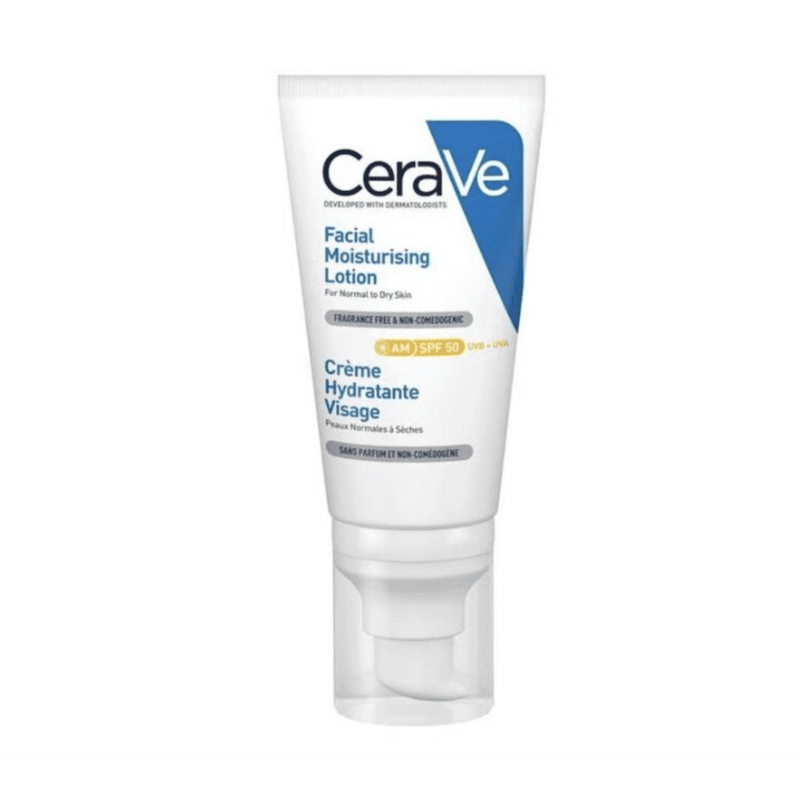
Nothing undermines the effort to get rid of sunspots more completely than skipping daily SPF. Every morning of unprotected UV exposure reactivates the hyperactive melanocytes responsible for existing sunspots and creates conditions for new ones, effectively reversing the treatment progress of the previous days. The CeraVe Facial Moisturizing Lotion AM SPF 50 removes every barrier to daily SPF compliance by combining broad-spectrum SPF 50 protection with ceramide barrier support, niacinamide brightening, and hyaluronic acid hydration in a single lightweight morning step.
The ceramide content supports the barrier that brightening actives can temporarily compromise. The niacinamide adds additional daily melanosome transfer inhibition. The SPF 50 provides the UV protection that is the single most important factor in whether a sunspot treatment programme produces lasting results or requires indefinite repetition as new spots form to replace the ones being faded.
Pros:
- SPF 50 broad-spectrum protection prevents the UV reactivation that undoes sunspot treatment progress
- Ceramides and niacinamide add barrier support and brightening to the daily sun protection step
- Lightweight formula supports consistent daily application without heaviness or greasiness
- Consolidates moisturiser, SPF, and niacinamide into a single morning step for routine efficiency
Cons:
- Small 1.75oz size requires frequent repurchasing with consistent daily use
- Should be reapplied every two hours during sustained outdoor sun exposure for continuous protection
The Routine That Gets Rid of Sunspots Step by Step
Morning: Cleanse, Skin By Zaron 15% Vitamin C Serum, CeraVe Facial Moisturizing Lotion AM SPF 50.
Evening: Cleanse, The Ordinary Glycolic Acid 7% Toner on alternate evenings, Cos De Baha Arbutin 5% Plus Licorice or Anua Niacinamide 10% Plus TXA on the evenings between, moisturise.
For sensitive skin: Replace glycolic acid with Naturium Azelaic Acid 10% and use the Cos De Baha Arbutin serum as the evening brightening layer.
All six products to get rid of sunspots featured in this guide are available at Perona Beauty. Visit us at Praise Plaza, 26 Osuntokun Avenue, Opposite House 25, Bodija, Ibadan, where our team will help you build the most appropriate routine for your skin tone and sunspot severity.
Sunspots Are Treatable With the Right Approach
The goal to get rid of sunspots is achievable for most people with the right combination of brightening actives, consistent daily application, and the SPF discipline that prevents new spots from forming while existing ones are being treated. Sunspots are not permanent features of ageing skin. They are the visible result of accumulated UV damage that can be progressively cleared with targeted, sustained treatment.
The six products in this guide address every dimension of that treatment: Skin By Zaron 15% Vitamin C for morning antioxidant and brightening protection, Cos De Baha Arbutin 5% for evening tyrosinase inhibition, Anua Niacinamide Plus TXA for dual-mechanism stubborn spot treatment, Naturium Azelaic Acid for sensitive skin brightening, The Ordinary Glycolic Acid for surface clearance acceleration, and CeraVe AM SPF 50 for the prevention that makes every other product matter. Use them consistently, give them the time that established pigmentation requires, and the results will justify the patience.
Frequently Asked Questions About How to Get Rid of Sunspots
How long does it actually take to get rid of sunspots?
Superficial sunspots begin to show visible fading within six to eight weeks of consistent daily treatment. Deeper, more established sunspots from years of UV exposure take three to six months to show significant improvement. The timeline to get rid of sunspots completely depends on the depth of the pigmentation and the consistency of the treatment routine and SPF use.
Can I get rid of sunspots without professional treatment?
Yes, for most sunspots. Topical treatment with the right brightening active combinations produces real, visible improvement in the majority of UV-induced sunspots. Professional treatments like IPL and chemical peels accelerate the process for deeper or more resistant spots, but they are not necessary for most people to see meaningful results from a well-structured topical routine.
Will sunspots come back after I get rid of them?
They can, if SPF is not used consistently after treatment. The melanocytes that produced the original spots remain hyperstimulated and will reactivate with UV exposure. Daily SPF use after successfully treating sunspots is the most important maintenance step for preventing recurrence.
Which brightening serum is best for getting rid of sunspots on dark skin?
The Cos De Baha Arbutin 5% Plus Licorice Serum and the Anua Niacinamide 10% Plus TXA 4% Serum are the most appropriate options for darker skin tones seeking to get rid of sunspots. Both work through mechanisms that do not carry the reactive pigmentation risk that high-concentration AHAs or aggressive Vitamin C can pose for melanin-rich skin.