

Most sunscreen advice stops at “wear SPF 30 or higher” and leaves everything else unsaid. But the gap between buying a sunscreen and actually using it every single day is where most people fall short, and that gap is almost always caused by choosing a product that does not suit their skin, climate, or lifestyle. Knowing how to choose the right sunscreen is about far more than reading the number on the bottle.
This guide walks through ten practical considerations that actually determine whether a sunscreen works for you long-term, followed by four products worth considering for daily use in Nigeria.
The Problem With How Most People Pick Sunscreen
The typical approach to buying sunscreen involves grabbing whatever has the highest SPF number on the shelf. This overlooks almost everything that actually determines whether that sunscreen gets used consistently: texture, finish, scent, how it interacts with skin type, and whether it leaves a cast on deeper skin tones.
Consistency is the entire point of sunscreen. A product with excellent protection on paper that gets abandoned after two weeks because it feels uncomfortable provides zero real-world protection. This is why learning to choose the right sunscreen needs to start with understanding your own skin and habits, not with comparing SPF numbers in isolation.
10 Practical Tips for Choosing Sunscreen That Actually Works
1. Understand that SPF only tells half the story.
SPF measures UVB protection. UVA protection, which is responsible for deeper skin ageing and pigmentation, requires a separate “broad-spectrum” label. Never assume a high SPF number means comprehensive protection without confirming broad-spectrum coverage.
2. Treat SPF 50 as your daily baseline in Nigeria’s climate.
Given the intensity and consistency of UV exposure across Nigeria year-round, SPF 50 provides a meaningfully better safety margin than SPF 30 for daily cumulative protection, particularly for anyone managing existing hyperpigmentation concerns.
3. Match the formula to how your skin actually behaves, not how you wish it behaved.
If your skin gets oily by midday regardless of what you apply, a gel or fluid sunscreen formula will serve you better than a rich cream, no matter how appealing that cream’s ingredient list looks on paper.
4. Test for white cast before committing to a full-size product.
Many mineral and hybrid sunscreens leave a visible grey or white residue on deeper skin tones. If possible, test a sample before buying, or look specifically for sunscreens marketed as cast-free for melanin-rich skin.
5. Factor in how the sunscreen sits under makeup.
If your daily routine includes foundation or concealer, choose a sunscreen formula known to create a smooth, makeup-friendly base rather than one that pills, separates, or causes makeup to slide throughout the day.
6. Look for added skincare benefits relevant to your specific concerns.
Sunscreens formulated with hydrating, brightening, or soothing ingredients let you address dryness, dark spots, or sensitivity within the same step as your daily UV protection, reducing the total number of products your routine requires.
7. Consider water and sweat resistance based on your actual day.
If your daily routine includes outdoor activity, exercise, or significant time in heat and humidity, water resistance becomes a meaningful factor, not just a feature for swimmers.
8. Pay attention to scent and sensory experience, not just performance data.
A sunscreen with an overpowering fragrance or an unpleasant residue is one you are likely to start skipping, regardless of how technically excellent its UV protection is. Sensory experience drives consistency.
9. Do not rely on SPF moisturiser alone for guaranteed protection.
Moisturisers with built-in SPF are a helpful addition but are typically applied in quantities too thin to deliver their stated protection level. A dedicated sunscreen applied at the correct amount provides more reliable protection.
10. Reapplication matters as much as initial selection.
Even the best sunscreen loses effectiveness after a few hours, especially with sweating, swimming, or touching the face throughout the day. Choose a formula light enough that reapplying over makeup or throughout the day feels practical rather than like a chore.
Why This Matters Even More for Nigerian Skin
Nigeria’s UV index remains consistently high throughout the year, which means the cumulative UV exposure for unprotected skin is significant even without obvious sunburn. For melanin-rich skin specifically, this exposure manifests primarily as hyperpigmentation, dark spots, and uneven tone rather than burning, which is precisely why so many people underestimate their need for daily protection.
When you choose the right sunscreen with Nigeria’s climate specifically in mind, lightweight, fast-absorbing, non-greasy formulas will always outperform heavier alternatives simply because they get used consistently in heat and humidity where heavier products feel intolerable.
4 Sunscreens Worth Adding to Your Routine
1. Eucerin Sensitive Protect SPF 50+ Sun Lotion — Best for Reactive and Sensitive Skin
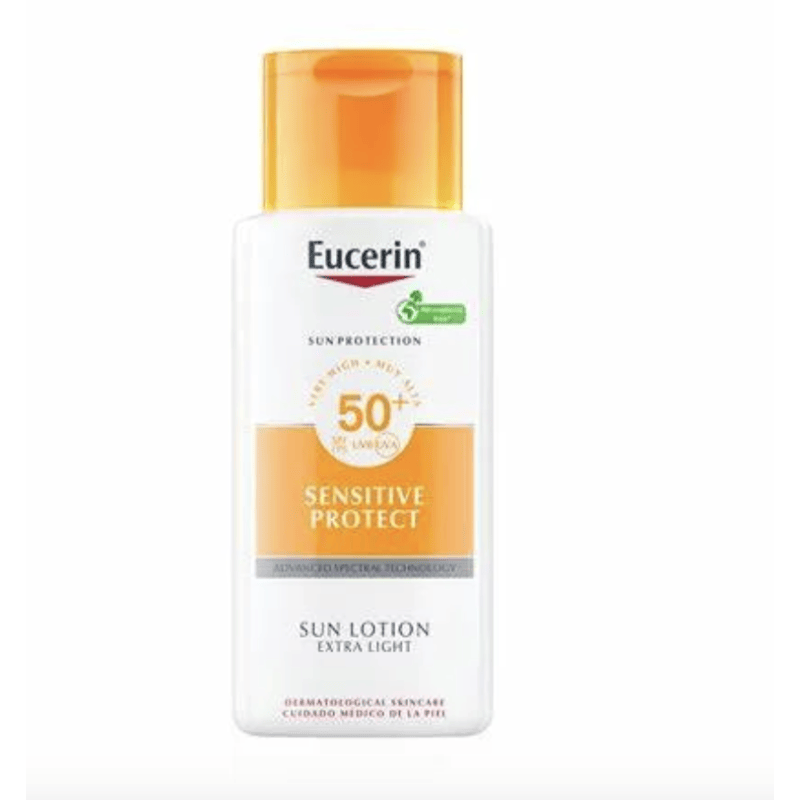
Sensitive skin often bears the brunt of sunscreen-related frustration, reacting to fragrances, certain chemical filters, or heavy textures with redness and discomfort. The Eucerin Sensitive Protect SPF 50+ Sun Lotion is formulated specifically to remove these barriers, delivering high broad-spectrum protection in a comfortable, hydrating lotion that does not provoke the reactivity many sensitive skin types experience with standard sunscreens.
This product demonstrates one of the central tips in this guide directly: a sunscreen that is comfortable enough to wear daily without irritation is infinitely more valuable than one with marginally superior lab data that ends up abandoned in a drawer.
Pros:
- SPF 50+ broad-spectrum protection specifically formulated for sensitive and reactive skin
- Comfortable, hydrating formula supports genuine daily consistency without irritation
- Addresses premature ageing and sun-induced damage alongside its core UV defence
- Well-suited to Lagos heat and humidity for sustained daily wear
Cons:
- Lotion texture sits slightly richer than gel options for very oily skin types
- Positioned at a higher price point reflecting its sensitive-skin specific formulation
2. La Roche-Posay Anthelios UVMUNE 400 Hydrating Cream SPF 50+ — Best for Maximum UV Coverage
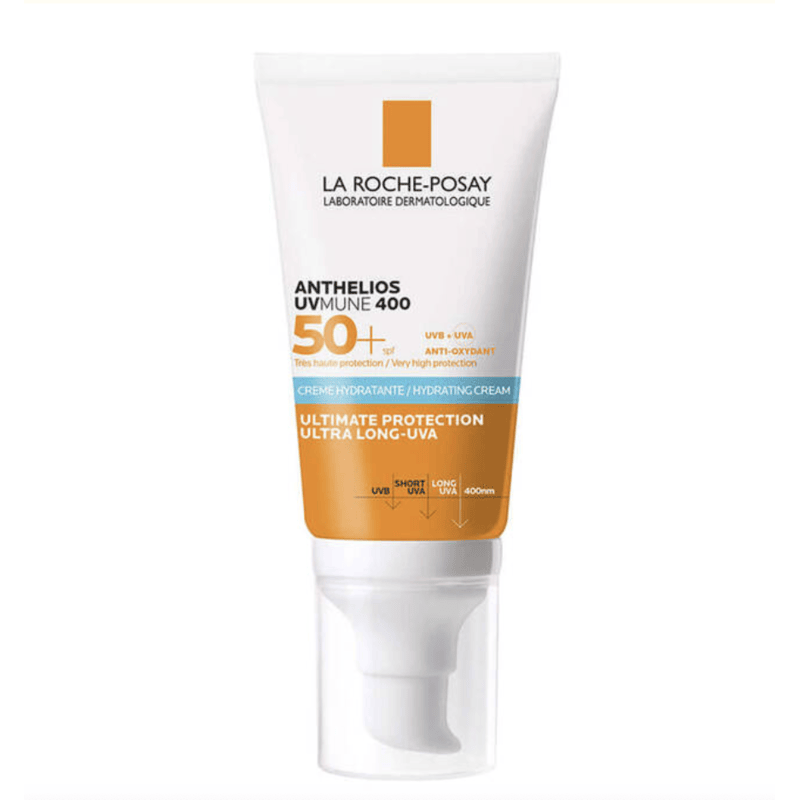
For anyone whose priority is the most thorough UV protection available, the La Roche-Posay Anthelios UVMUNE 400 distinguishes itself through its protection against ultra-long UVA rays, a category of UV radiation that penetrates deeper into the skin and contributes significantly to long-term collagen breakdown and pigmentation that standard UVA filters do not fully address.
The hydrating, non-greasy cream format means this advanced protection does not come at the cost of daily comfort, directly satisfying the tip that the best sunscreen choices balance protection with genuine wearability.
Pros:
- Covers UVA, UVB, and ultra-long UVA rays for the most comprehensive protection on this list
- Hydrating, non-greasy texture supports comfortable everyday use
- Targets dark spots and premature ageing alongside fundamental sun protection
- High SPF 50+ rating appropriate for Nigeria’s intense year-round UV levels
Cons:
- Premium price point reflects the advanced filter technology in the formulation
- Cream texture may benefit from a setting powder for very oily skin under makeup
3. Derma:B Everyday Sunscreen SPF 50+ — Best for Simple, Sustainable Daily Use
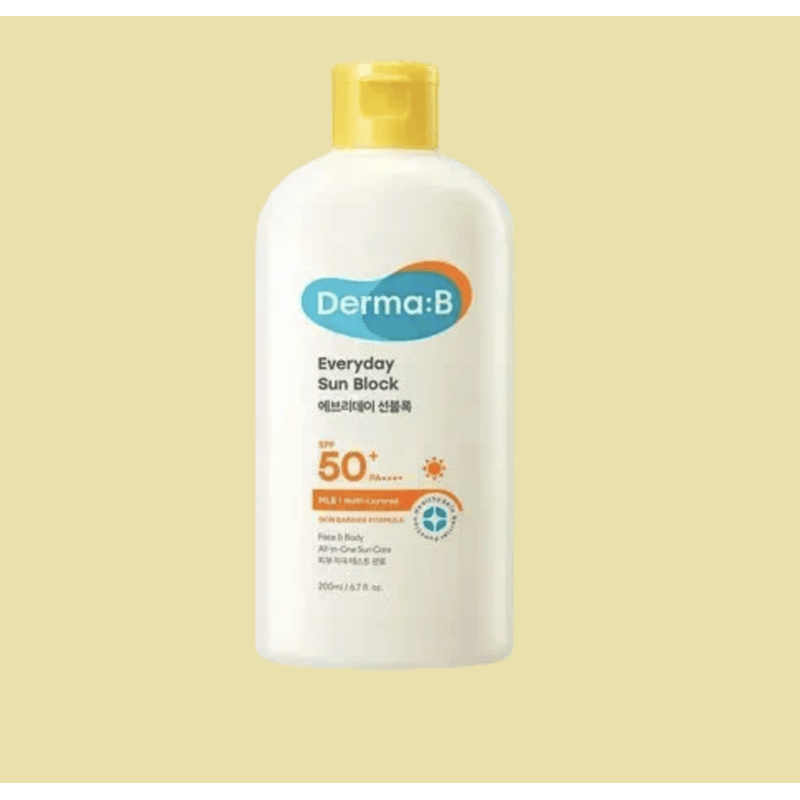
True to its name, the Derma:B Everyday Sunscreen SPF 50+ is built around the principle that sunscreen only works if you use it every day, and it removes every obstacle to that consistency. Its lightweight broad-spectrum formula protects against UVA and UVB without the greasiness or discomfort that derails daily sunscreen habits.
Soothing and moisturising ingredients address comfort directly, making this one of the most practical entries on this list for anyone establishing a sustainable daily sunscreen routine without unnecessary complexity.
Pros:
- Lightweight SPF 50+ broad-spectrum formula designed specifically for daily comfort
- Soothing and moisturising ingredients prevent the dryness that disrupts consistent use
- Helps prevent dark spots and premature ageing through consistent daily protection
- Practical, accessible choice for building a long-term sunscreen habit
Cons:
- Does not include the advanced ultra-long UVA filtering of more premium formulations
- Best suited to general daily protection rather than targeted anti-ageing concerns
4. Dang Hydra Glow Sun Protection Gel — Best for a Dewy, Hydrated Finish
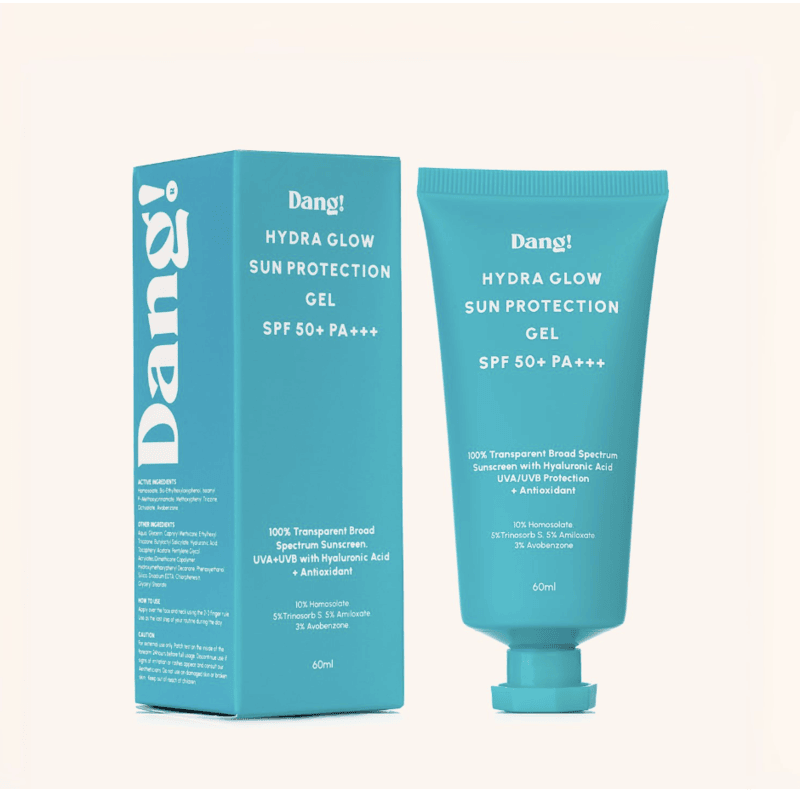
The Dang Hydra Glow Sun Protection Gel addresses a sensory preference that genuinely affects sunscreen consistency: the desire for a dewy, healthy-looking finish rather than a flat, matte, or chalky one. Its lightweight gel formula provides UVA and UVB protection while delivering hydration and a natural glow, making the daily act of applying sunscreen feel like a skincare benefit rather than a chore.
This directly reflects one of this guide’s most practical tips: aesthetic preference is not vanity, it is a genuine driver of whether a sunscreen gets used consistently or skipped.
Pros:
- Lightweight gel delivers broad-spectrum UV protection with a natural, dewy glow
- Moisturising and skin-conditioning ingredients protect against both sun damage and dryness
- Helps prevent dark spots and premature ageing alongside its hydrating glow effect
- Well-suited to oily and combination skin types wanting a non-matte sunscreen option
Cons:
- The glow finish may not suit those who specifically prefer a fully matte result
- May require more frequent reapplication during intense heat or heavy sweating
Building Sunscreen Into a Routine That Actually Sticks
The sunscreen step belongs at the very end of your morning skincare routine, applied after moisturiser and before makeup. Use a full teaspoon for face and neck to achieve the labelled SPF protection, and keep a travel-size version in your bag for reapplication every two hours during prolonged sun exposure.
All four sunscreens featured in this guide are available at Perona Beauty. Visit us at Praise Plaza, 26 Osuntokun Avenue, Opposite House 25, Bodija, Ibadan, and our team will help you choose the right sunscreen based on your skin type and daily lifestyle.
Frequently Asked Questions About How to Choose The Right Sunscreen
Does darker skin need less sunscreen protection?
No. While melanin provides some natural UV defence, it does not prevent UV-triggered collagen breakdown or hyperpigmentation, both of which are particularly common concerns in melanin-rich skin. Daily sunscreen remains essential regardless of skin tone.
What is the biggest mistake people make when trying to choose the right sunscreen?
Prioritising SPF number above all else while ignoring texture, finish, and how realistically they will use the product daily. A technically excellent sunscreen that gets abandoned after two weeks provides far less real-world protection than a good sunscreen used consistently every day.
How much sunscreen should I actually apply?
A full teaspoon, roughly two finger-lengths of product, for the face and neck is the amount required to achieve the SPF protection stated on the packaging. Most people apply significantly less than this, which is why their actual protection falls short of the labelled SPF.
Is it necessary to reapply sunscreen throughout the day?
Yes, particularly during direct outdoor exposure, sweating, or swimming. Reapply every two hours for consistent protection. This is one of the most overlooked aspects of how to choose the right sunscreen, since a formula that feels too heavy or disruptive to reapply over makeup will simply not get reapplied.