
The skincare industry loves clean categories. Oily skin, dry skin, normal skin, sensitive skin. Products are shelved by these labels, routines are built around them, and people spend years treating themselves as one type when their skin is clearly being governed by more than one set of rules at the same time.
Combination skin is the category that disrupts all of this, and it is far more common than most people realise. If your routine has never quite worked, if every product you try solves one problem while creating another, and if different parts of your face seem to need entirely different care, this guide was written for you.
How to Tell If You Have Combination Skin
Combination skin is defined by the simultaneous presence of meaningfully different skin conditions across different zones of the face. It is not skin that oscillates between oily and dry depending on the season. It is skin that is both at the same time in different places.
The T-zone, which includes the forehead, nose, and chin, tends to be oily, congested, and prone to blackheads and occasional breakouts. The cheeks, temples, and outer facial areas tend to be normal to dry, sometimes tight, and occasionally flaky. These two skin realities exist on the same face at the same moment, which is precisely what makes combination skin so difficult to manage with products designed for one skin type only.
Not everyone with combination skin fits the classic T-zone pattern exactly. Some people find their oiliness is concentrated only on the nose and inner chin while the rest of the face is quite dry. Others have a more central oily zone that extends across most of the face while only the outer cheeks are dry. What all of these patterns have in common is that no single description of the skin as oily or dry captures the full picture, because combination skin is genuinely both.
What Is Actually Causing Combination Skin?
The underlying cause of combination skin is an uneven distribution of sebaceous glands across the facial skin. The T-zone contains a significantly higher concentration of these oil-producing glands than the outer facial areas, which means sebum production is naturally higher in these zones regardless of what the rest of the face is doing.
When this built-in imbalance in gland density is pronounced enough to create visibly different skin zones, the result is combination skin. The oily zones produce more sebum than the skin needs, leading to shine, pore congestion, and breakouts. The drier zones produce less, leading to dehydration, tightness, and sensitivity.
Hormonal activity amplifies this pattern. Androgens stimulate sebaceous gland activity, which is why combination skin becomes more pronounced during puberty, hormonal fluctuation across the menstrual cycle, and perimenopause. Nigerian climate also plays a role: humidity activates sebum production and makes the oily zones of combination skin more pronounced, while harmattan dramatically dries the already-drier zones, widening the contrast between the two during this season.
The Signs That Point Clearly to Combination Skin
People with combination skin tend to share a recognisable set of experiences that, read together, point clearly to this skin type rather than either of its components in isolation.
Midday oiliness that is obviously concentrated on the nose and forehead while the cheeks remain comfortable or even slightly dry is one of the most consistent indicators of combination skin. Purely oily skin produces shine uniformly. Combination skin produces shine in a specific, repeating pattern.
The experience of makeup sitting differently on different parts of the face, sliding on the T-zone while sitting patchy or dry on the cheeks, reflects the different surface conditions that combination skin creates across the face. Finding no single moisturiser that satisfies the whole face is another reliable pointer.
Post-breakout dark marks that appear primarily on the nose, chin, and forehead, not evenly across the face, reflect the uneven oil production and congestion that characterises the oily zones of combination skin rather than generalised acne prone skin.
7 Practical Signs You Have Combination Skin
- Your T-zone is noticeably shinier than the rest of your face by midday regardless of what you apply in the morning.
- You have blackheads predominantly on your nose rather than evenly distributed across your face.
- Rich moisturisers satisfy your cheeks but cause breakouts or shine on your forehead and nose.
- Lightweight moisturisers control your T-zone but leave your cheeks feeling tight or looking dull.
- Your pores look visibly larger on your nose and inner chin than on your cheeks and temples.
- Your cheeks become flaky during harmattan while your T-zone remains oily throughout the same period.
- Your skin has genuinely responded differently to the same product on different parts of your face.
Why the Wrong Routine Makes Combination Skin Worse
The most common mistake people with combination skin make is treating it as whichever of its components is most obvious or most troubling at a given moment. During a period of breakouts, the routine becomes targeted at oiliness and congestion, stripping the drier zones in the process. When dryness and tightness are the dominant experience, the routine shifts to rich, nourishing products that improve the cheeks but worsen T-zone congestion.
This pattern of alternating between oily-skin products and dry-skin products in response to whichever zone is most demanding is one of the most self-perpetuating cycles in skincare for combination skin. Each correction makes the other problem worse, and the skin never reaches a state of genuine equilibrium.
The approach that breaks this cycle is a balanced base routine of lightweight, non-comedogenic products that address both zones adequately, with targeted application of zone-specific products only where the needs genuinely diverge. Products with balancing actives like niacinamide, which simultaneously manages sebum and strengthens the barrier, are among the most strategically valuable choices for combination skin because they serve both zones through the same mechanism.
6 Best Products for Combination Skin
1. Anua Heartleaf Quercetinol Deep Cleansing Foam — Best Daily Cleanser
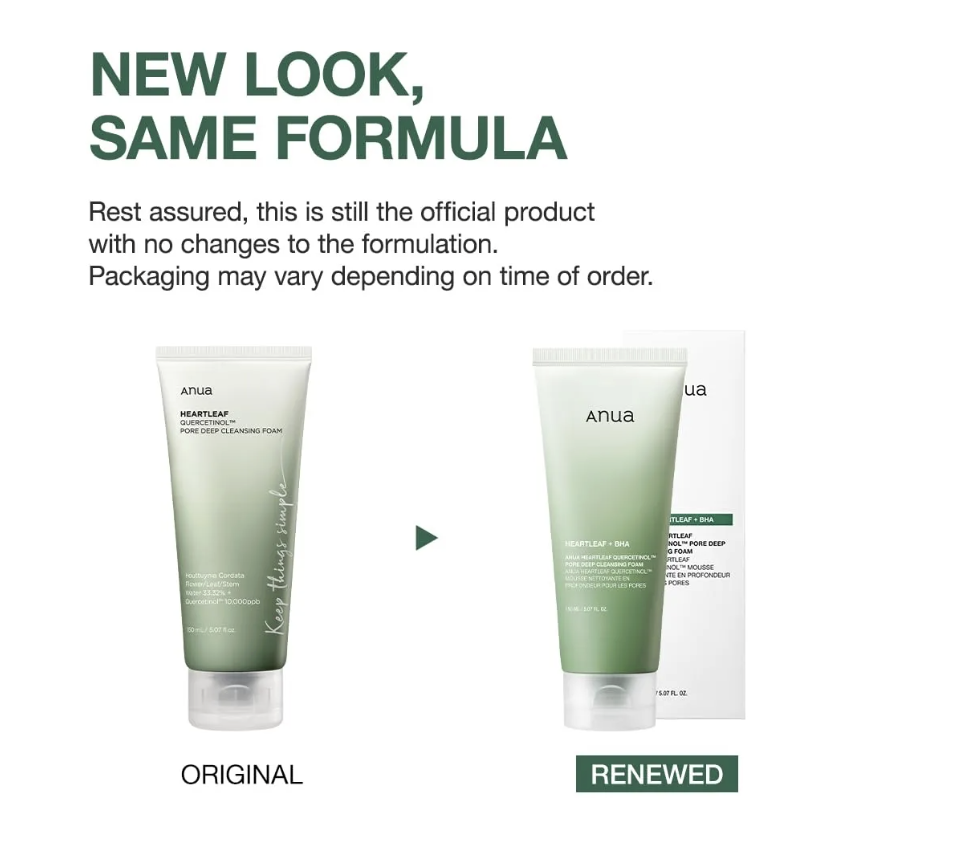
Choosing a cleanser for combination skin requires finding a formula thorough enough to manage T-zone congestion without stripping the moisture that the drier zones need to retain. The Anua Heartleaf Quercetinol Deep Cleansing Foam achieves this through its low-pH, gentle formulation that cleanses deeply enough for oily pores while remaining mild enough to leave the cheeks comfortable rather than tight post-cleanse.
Heartleaf extract calms the inflammation that accompanies congested oily zones, while Quercetinol provides antioxidant protection relevant for combination skin dealing with Lagos urban pollution daily. A cleanser that manages both zones without compromising either is the most foundational product decision in a combination skin routine, and the Anua Heartleaf Foam makes that decision straightforward.
Pros:
- Low-pH formula cleanses the oily T-zone thoroughly without stripping the drier zones of combination skin
- Heartleaf extract calms inflammation and sebum-related congestion in oily areas
- Leaves all zones of the face clean and comfortable without post-cleanse tightness
- Suitable for sensitive and acne-prone skin alongside combination skin concerns
Cons:
- Foam texture provides less emollient cushioning than cream cleansers for very dry cheek areas
- Low-pH gentle formula may feel less cleansing than the stronger surfactants oily skin types are accustomed to
2. Medicube PDRN Pink Niacinamide Milky Toner — Best Balancing Toner
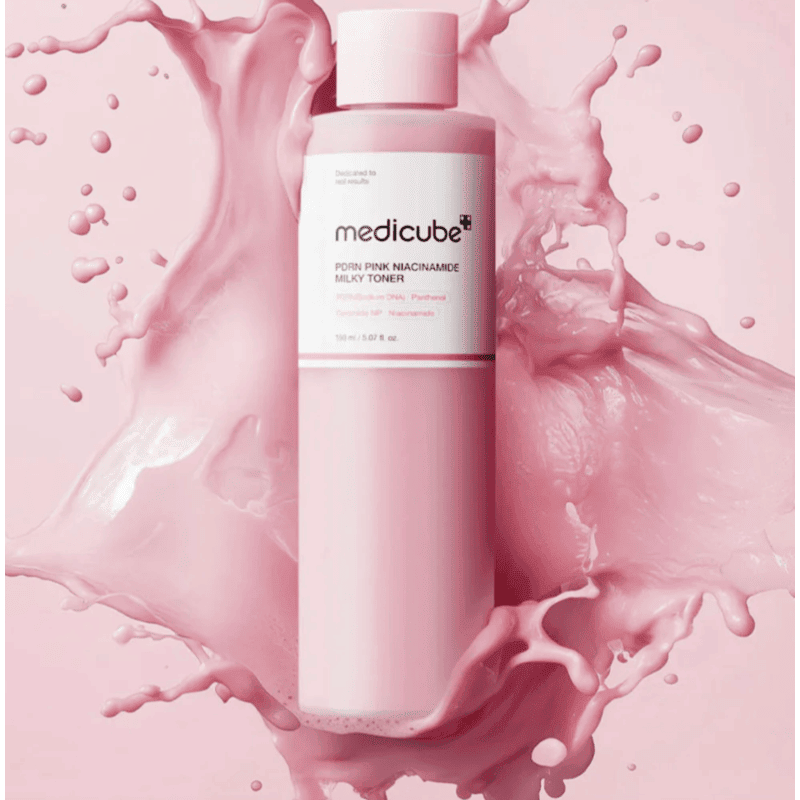
The toner is where many combination skin routines make their most consequential error. Astringent toners reduce T-zone oiliness at the cost of drying the cheeks. Rich hydrating toners satisfy the cheeks at the cost of congesting the T-zone. The Medicube PDRN Pink Niacinamide Milky Toner occupies the middle ground with a milky, balancing formula built around ingredients with genuinely dual-zone relevance.
Niacinamide regulates sebum production in the oily zones while strengthening the barrier in the drier ones. PDRN supports cellular repair and skin renewal across the full face. The milky texture hydrates without overloading any zone, making this toner one of the most practically suitable products for the competing demands of combination skin in a single step.
Pros:
- Niacinamide simultaneously manages T-zone sebum and strengthens the barrier in drier zones
- PDRN supports skin repair and renewal for improved quality across all zones of combination skin
- Milky texture hydrates without congesting, suitable for all zones simultaneously
- Brightening benefit progressively improves the overall radiance of combination skin with daily use
Cons:
- Milky texture may feel slightly richer than very oily-prone T-zones prefer
- Progressive brightening requires consistent use over several weeks to become visibly apparent
3. Medicube Niacinamide 15% Plus TXA Serum — Best Brightening Serum
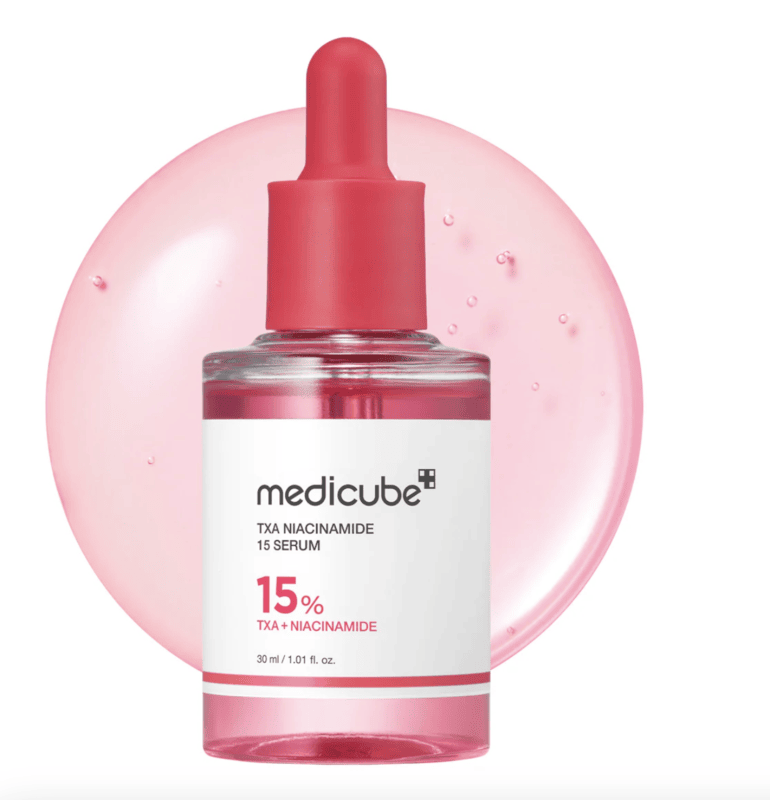
Post-breakout marks on the T-zone and general dullness on the drier outer zones are two distinct brightening concerns that frequently coexist in combination skin. The Medicube Niacinamide 15% Plus TXA Serum addresses both through its combination of high-dose niacinamide, tranexamic acid, and hyaluronic acid in a lightweight, fast-absorbing formula.
Niacinamide at 15% targets melanin transfer inhibition and sebum control simultaneously, making it relevant for the dark spot concerns of the breakout-prone T-zone and the general tone improvement needs of the outer zones. TXA adds a second melanin-inhibiting mechanism for more stubborn marks. Hyaluronic acid delivers hydration to the drier zones within the same product without adding congestion risk to the oily areas of combination skin.
Pros:
- 15% Niacinamide and TXA address post-breakout marks and uneven tone through two separate mechanisms
- Hyaluronic acid hydrates drier zones without adding congestion risk to the oily T-zone
- Lightweight formula absorbs quickly and layers well in a multi-step combination skin routine
- Strengthens the skin barrier across all zones for improved resilience and texture
Cons:
- 15% Niacinamide concentration requires gradual introduction for reactive or first-time users
- Most effective used in the evening when paired with a Vitamin C serum in the morning
4. Arencia PDRN Booster Shot — Best Repair and Hydration Serum
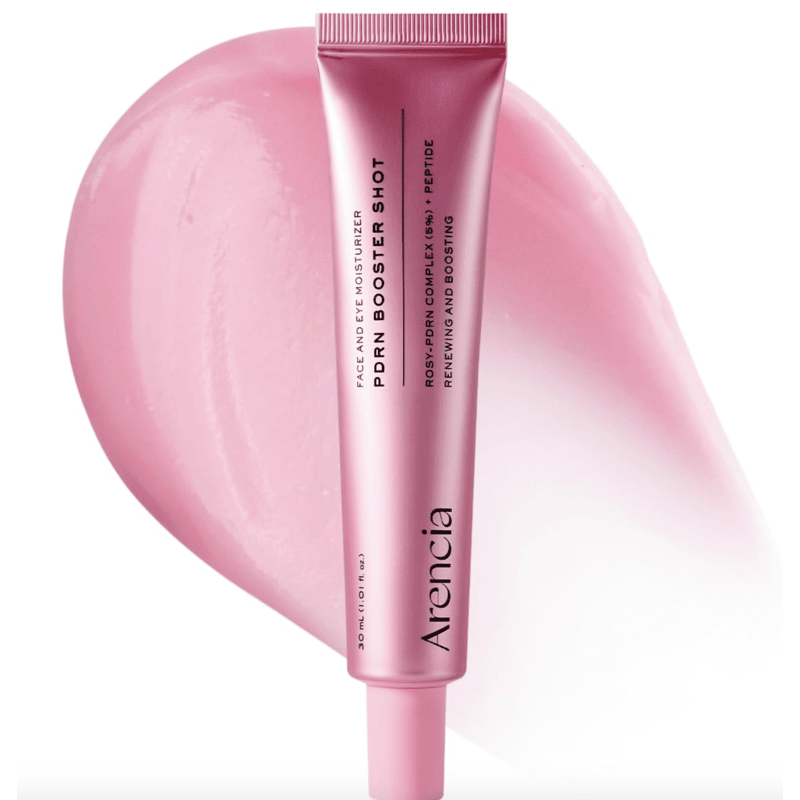
Dehydrated combination skin is a commonly overlooked condition where the T-zone continues to produce excess oil while the skin cells across all zones lack adequate water content. The Arencia PDRN Booster Shot is the most directly targeted product in this guide for this specific pattern of combination skin stress.
Salmon-derived and rose-derived PDRN promote cellular repair and regeneration across both the post-breakout healing needs of the T-zone and the barrier repair needs of the drier outer zones. Multiple molecular weights of hyaluronic acid deliver hydration at different skin depths, while ceramides rebuild the barrier structure and peptides support collagen production and firmness. For combination skin that is stressed, dehydrated, and dealing with multiple concerns simultaneously, this booster addresses them from multiple angles in a single step.
Pros:
- Multiple hyaluronic acids deliver layered hydration to all zones of combination skin at different depths
- PDRN promotes cellular repair relevant for both post-breakout healing and barrier restoration
- Ceramides rebuild barrier integrity across the drier and oilier zones simultaneously
- Peptides support firmness and collagen production for improved skin quality over time
Cons:
- Multi-active formula is more complex than simple hydration maintenance alone requires
- Gradual introduction recommended for skin new to PDRN-based formulations
5. Arencia Vitamin C Booster Shot — Best Morning Antioxidant Serum
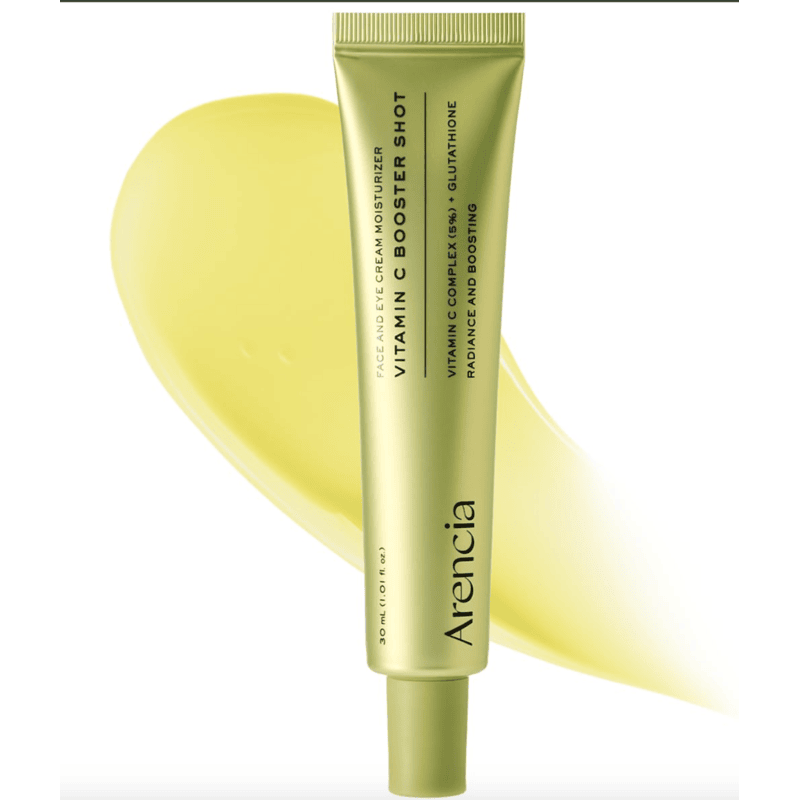
The environmental oxidative stress that Lagos skin faces daily, from UV radiation and urban pollution, affects the zones of combination skin differently but consistently. The Arencia Vitamin C Booster Shot provides antioxidant protection that is relevant for both: Vitamin C protects the collagen breakdown and pigmentation that the drier outer zones accumulate from UV exposure, while niacinamide addresses the sebum-oxidation and inflammation that drives T-zone congestion and post-breakout marks.
Pure Vitamin C alongside stable derivatives ensures reliable activity throughout the product’s use, while glutathione adds complementary brightening that improves overall skin clarity for combination skin dealing with uneven tone across different zones.
Pros:
- Pure Vitamin C and stable derivatives provide comprehensive antioxidant protection for combination skin
- Niacinamide contributes sebum control and barrier support across all zones simultaneously
- Glutathione brightens overall tone and improves radiance for combination skin with uneven pigmentation
- Lightweight formula absorbs without congesting the oily zones of combination skin
Cons:
- Requires consistent morning SPF to prevent photooxidation of the Vitamin C formula
- Should be introduced gradually for skin with known Vitamin C sensitivity
6. Medicube TXA 5% Niacinamide Capsule Cream — Best Moisturiser for Combination Skin
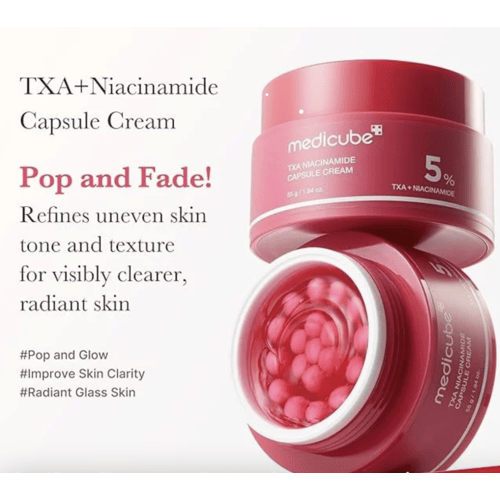
A moisturiser for combination skin must walk a specific line: hydrating enough for dry zones, light enough for oily zones, and active enough to address the tone and texture concerns that accumulate across both. The Medicube TXA 5% Niacinamide Capsule Cream achieves this through its dual-texture customisable formula and a comprehensive active ingredient list that serves the full range of combination skin needs.
TXA, niacinamide, alpha arbutin, glutathione, ceramides, and hyaluronic acid together address brightening, barrier strengthening, hydration, and sebum control without favouring any one zone type over another. The capsule texture format allows the richness to be adjusted by mixing, making it genuinely adaptable to the mixed needs of combination skin without requiring a completely different product for each zone.
Pros:
- Dual-texture customisable formula adapts to the different zone needs of combination skin
- TXA and alpha arbutin address the post-breakout marks concentrated in the T-zone
- Ceramides and hyaluronic acid satisfy the barrier and hydration needs of drier outer zones
- Suitable for sensitive and acne-prone skin across all zones of combination skin
Cons:
- Dual-texture capsule format requires familiarisation before application becomes second nature
- Multiple brightening actives require gradual introduction for skin with reactive history
The Routine Structure for Combination Skin
Morning: Anua Heartleaf Cleansing Foam, Medicube PDRN Niacinamide Milky Toner, Arencia Vitamin C Booster Shot, Medicube TXA Niacinamide Capsule Cream, SPF.
Evening: Anua Heartleaf Cleansing Foam, Medicube PDRN Niacinamide Milky Toner, Arencia PDRN Booster Shot or Medicube Niacinamide 15% TXA Serum, Medicube TXA Niacinamide Capsule Cream.
Apply serums with slightly heavier concentration on the zones that need them most rather than applying uniformly across the face. The PDRN Booster Shot benefits from extra application on the drier cheek areas. The Niacinamide 15% TXA Serum is most useful concentrated on the T-zone where post-breakout marks are most present.
All six products in this guide are available at Perona Beauty. Visit us at Praise Plaza, 26 Osuntokun Avenue, Opposite House 25, Bodija, Ibadan, and our team will help you identify the specific pattern of your combination skin and build the most appropriate routine around it.
Your Skin Is Not Confused. Your Routine Might Be.
Combination skin behaves exactly as its biology dictates. The frustration most people experience with it is not the skin’s fault. It is the result of treating a multi-zone skin type with single-zone solutions.
Once you recognise the signs of combination skin accurately, the routine becomes logical rather than contradictory. Balanced cleansing, niacinamide-based toning, zone-aware serum application, a moisturiser that serves both zone types, and consistent daily SPF produce the equilibrium that combination skin is capable of when it is met with the right approach. The six products in this guide provide that approach across every routine step.
Frequently Asked Questions About Combination Skin
Can combination skin become oily or dry skin over time?
Yes. Combination skin changes with age as sebaceous gland activity naturally declines. Many people find their T-zone becomes less oily through their 30s and 40s, gradually shifting their combination skin toward normal or dry. Hormonal changes, particularly during pregnancy and perimenopause, can also temporarily shift the skin type balance significantly.
Why does my combination skin feel dry in the morning and oily by noon?
Morning dryness in combination skin often reflects the overnight moisture loss from areas with lower sebum production, particularly the cheeks. As the day progresses and sebaceous glands in the T-zone become active, the oily zones catch up and surpass the drier zones in visible oil production. This pattern is one of the most consistent and recognisable experiences of combination skin.
Is dehydration a concern for combination skin even with a shiny T-zone?
Yes, and it is one of the most misunderstood aspects of combination skin. Sebum and water are different things. An oily T-zone reflects high sebum production, not high water content. The skin cells in even the oiliest zones of combination skin can simultaneously lack adequate hydration, producing the dehydrated-oily condition where the skin is both shiny and lacking in cellular water content.
How should I apply SPF on combination skin without making the T-zone worse?
Choose a lightweight, non-greasy SPF formula like the La Roche-Posay Anthelios range rather than a rich cream SPF. Apply the same amount across the full face rather than skipping the T-zone. A setting powder with SPF can be applied specifically on the T-zone after the base SPF to control shine without compromising the sun protection that every zone of combination skin needs equally.